
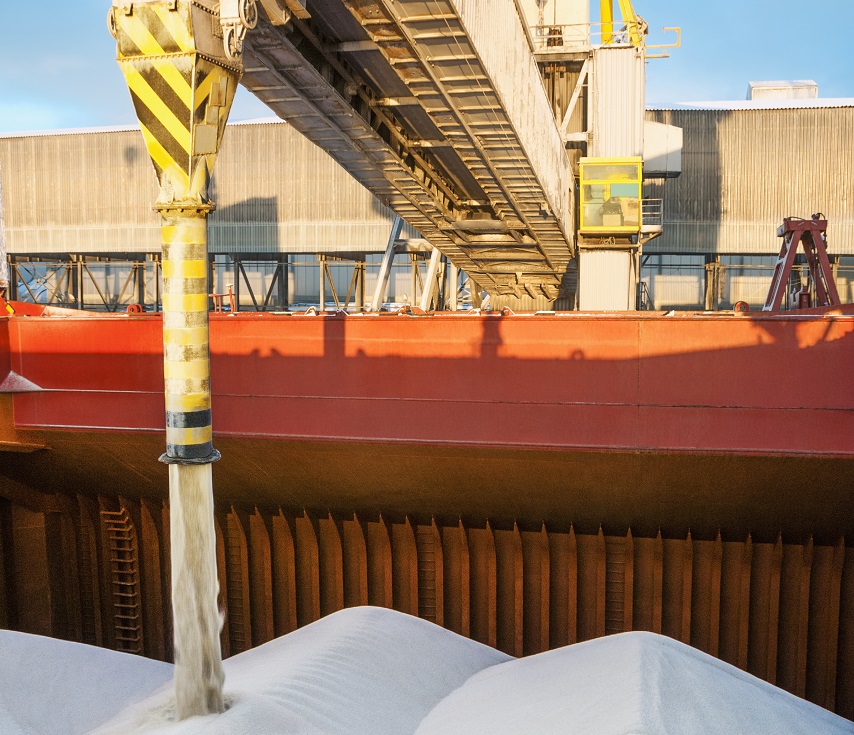
Tag: brisbane urea

  • Fertiliser Pricing Update Feb23

    Fertiliser Pricing Update Feb23

    Fertiliser Price Update 14th Feb 2023

    Domestically the market is still soft, but it feels like we are getting close to the bottom for most fertiliser prices as operations start to commit for the season.

    Depending on collection timing Urea pricing is currently around mid $700’s ex port and MAP/DAP is in the high $1000’s, which is a fair change from last years prices. Even SOA at low 600’s and SSP at low $500’s is refreshing news for growers.

    Globally a few countries haven’t committed to Urea tenders which is keeping the price soft. However some domestic ports are low on stock, so timing will influence your procurement decisions.

    Phosphate prices on the global market are firm, and the length domestically should be taken up with new winter crop commitments.

    If you haven’t locked in your fertiliser requirements for the year, please contact us for pricing and options.

    Whilst the prices are soft, the question is how long do you wait? But it will soon start to become logistically hard to get the tonnes out of each port in time for planting.

  • Urea Rush

    Urea Rush

    There is a rush for bulk Urea fertiliser across the eastern seaboard with the forecasted rain next week.

    Farmers are rushing to top dress crops with urea to benefit from the predicted rain across the eastern states.

    In some areas urea is being applied by plane as fast as they can spread it.

    Pacfert RT tipping

  • Custom Fertiliser Blends

    Custom Fertiliser Blends

    Balance

    A quality fertiliser should have a balance of all the nutrients needed for optimum plant growth, yield, and quality. Does your fertiliser contain more than N-P-K? Does it include calcium and sulfur? How about trace minerals? If you answered yes, than you are part of the way toward a quality fertiliser. If you said no or don’t know, consider changing to a more balanced fertiliser.

    Soluble to Slow-Release

    This aspect of fertiliser refers to nutrient availability over time. Most fertilisers are highly soluble, which gives the plant a dose of nutrients early on, but leaves fewer nutrients for later in the growing season. By balancing soluble to slow-release, the plant receives adequate nutrients throughout the growing season. The source of nutrients you use can make a big difference in how those nutrients are distributed over time. Take a look at your nutrient source. MAP, for example, has a lower pH which will allow for a longer feed time in the soil compared to DAP. Potassium from K-mag and Sulfate of Potash will release slower in the soil than 0-0-60 (potassium chloride) because 0-0-60 is very water soluble.

    pH

    The pH of fertiliser plays an important role in its availability. When a fertiliser has a pH in the range of 5.5 to 6.5, the nutrients are more available to the plant with less chance of them becoming tied up in the soil. Also, the lower pH fertiliser helps to make nutrients already in the soil more available to growing plants. This can mean more nutrient release and uptake in the root zone. Do you know the pH of your fertiliser ingredients?

    Non-Harmful

    A fertiliser should be as gentle as possible on the soil, the roots and the soil microbes. High levels of chloride (found in 0-0-60) and ammonia (found in anhydrous or DAP) can have negative side effects such as causing burn which can harm seedlings and roots. Keeping those negatives to a minimum, plus supplying root and biological stimulants, can have a positive effect on yield.

    Pacific Fertilisers custom blended products are formulated with all of the above in mind. PacFert finds and sources ingredients that make a complete balanced fertiliser. We blend soluble and slow-release nutrients, and we look at the pH balance to determine quality and effectiveness when applied to the soil. We can also use humates as a carbon source to hold nutrients in the soil so they can be available all season to the plant. Using the right source and having it available at the right time keeps your costs down and at the same time maximizes your crop’s potential.

    fertiliser