Tag: reactive rock phosphate

  • Aerial Grade Phosphate Rock

    Aerial Grade Phosphate Rock

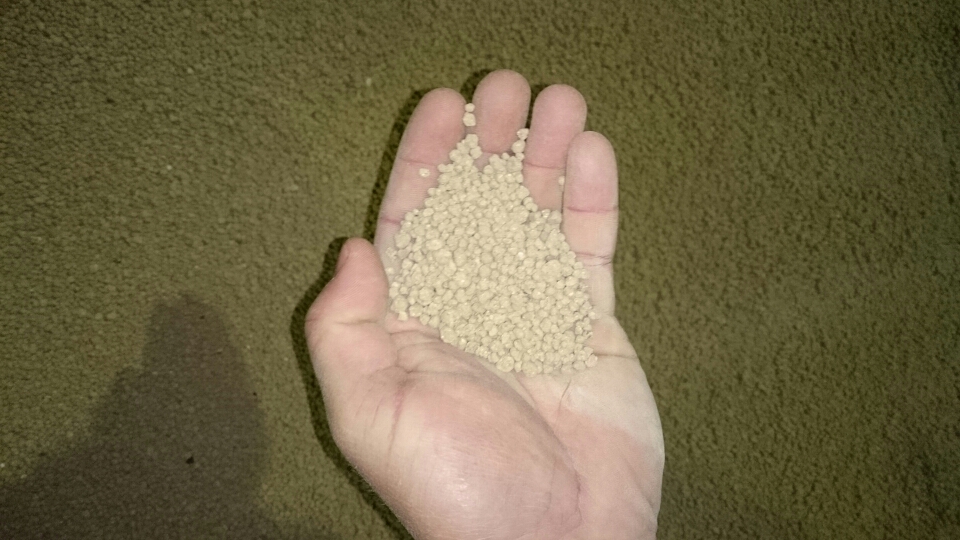
    Pacific Fertiliser’s aerial grade phosphate rock  RPR210 is a granular 2-10mm product that will be available in 2014.

    The product provides minimal dust and very flowable properties, suitable for aerial applications.

    The phosphorous is then released into the soil over a few years providing good long term returns with minimal applications when applied correctly.

    PacFert can also blend this with prilled gypsum and/or prilled lime for a one pass application.
     

    Superspread10_Aerial_ Spreading 4

  • Organic Soil Amendments and Fertiliser

    Organic Soil Amendments and Fertiliser

    Pacific Fertiliser sells various types of organic soil amendment products.

    These include:

    – Ag Lime (calcium source and pH adjustment)
    – Gypsum (source of calcium  and sulphur)
    – Soft Rock Phosphate (source phosphorous and calcium with some pH adjustment)
    – Dolomite (source of calcium and magnesium with pH adjustment)
    – Guano
    – Fish meal
    – RPR Reactive Phosphate Rock
    – Fishmeal
    – Sulphate of Potash (SOP)
    – Muriate of Potash (MOP)
    – Kieserite  (Magnesium sulphate)
    – Magnesium Oxide
    – Magnesium Carbonate
    – Humates (brown coal fines)
    – Liquid fulvic and humic acid
    – Blends of the above products and trace elements


    PacFert does not have organic certification for its products, but because they are natural minerals mined from the ground they are deemed organic. Any processing by Pacific Fertiliser is to grind, classify or package the products for agricultural applications, which means the natural products are still suitable for organic applications/farms.


  • RPR-GYP

    RPR-GYP

    RPR-GYP is a blend of both Pacific Fertiliser’s RPR2 Phosphate Rock and sub 2mm Mined Gypsum products, that provide an organic alternative to ordinary “super”.

    Unlike conventional acidified fertilisers, RPR-GYP provides a slow release source of plant-available phosphate, as well as calcium and sulphur needed for plant growth and healthy
    soils.

    All the products used in RPR-GYP are mined in Australia and are of the highest quality, ensuring you get a superior result, whilst supporting a local business.

    General Specifications 80/20:
    • Total P – 7.2%
    • Calcium – 22.3%
    • Sulphur – 4.5%

    We can do any blend ratio and also add in elemental sulphur to increase the dissolution of the RPR and the sulphur content.


    rolling

    DPI NSW Research in 2006

    In conventional broad acre agriculture, plant available soil phosphorous (P) is usually maintained with P fertiliser like superphosphate. In similar organic agricultural systems such fertilisers are unacceptable inputs so P is often deficient for crop and pasture production on organic farms. A survey of organic farms in south-eastern Australia in 2005 reported available soil phosphate (Olsen P) levels that were frequently less than 6mgP/kg which indicated deficiencies. Improved P management, including developing a fertiliser that would suit organic farming regulations, is required to sustain and increase production on these farms. Reactive rock phosphate (RPR) and elemental sulphur (S) are natural products, suitable for organic use.

    Field and pot experiments were done to measure the impact of ground RPR and co-treatment of RPR with finely ground S, on available soil phosphate, plant dry matter and P concentration. Under dryland farming conditions in this region of southern Australia (<600 mm rainfall, soil organic carbon <3%), co-treatment of RPR with S was necessary to increase Olsen P. The higher values of Olsen P were generally associated with increased plant dry matter, together with higher P concentration in the dry matter. The amount of S required was less the more acidic the soil, but greater than that reported as being effective in higher rainfall situations (>1000 mm) and higher soil organic carbon (11%).

    It was deduced that the S is probably required to overcome the constraint on the dissolution of RPR resulting from frequent periods of low soil moisture. It was concluded that for the south-eastern cropping zone, co-treatment of ground-reactive rock phosphate with finely ground elemental S at rations (RPR:S) of at least 2:1, depending on soil pH, is required for effective use of RPR even in strongly acidic soils. It was recommended that organic farmers may recover soil P fertility by applying RPR+ fertiliser to their most acidic paddocks, postponing soil liming and managing the paddocks to conserve soil moisture.

    http://www.dpi.nsw.gov.au/research/areas/productivity/farming-systems/scientific-outputs/2006/1018