Pacific Fertiliser sells soft rock phosphate from its plant in Cowra NSW. We also offer organic and sustain single super alternatives call SRP Sustain and SRP SutainR.

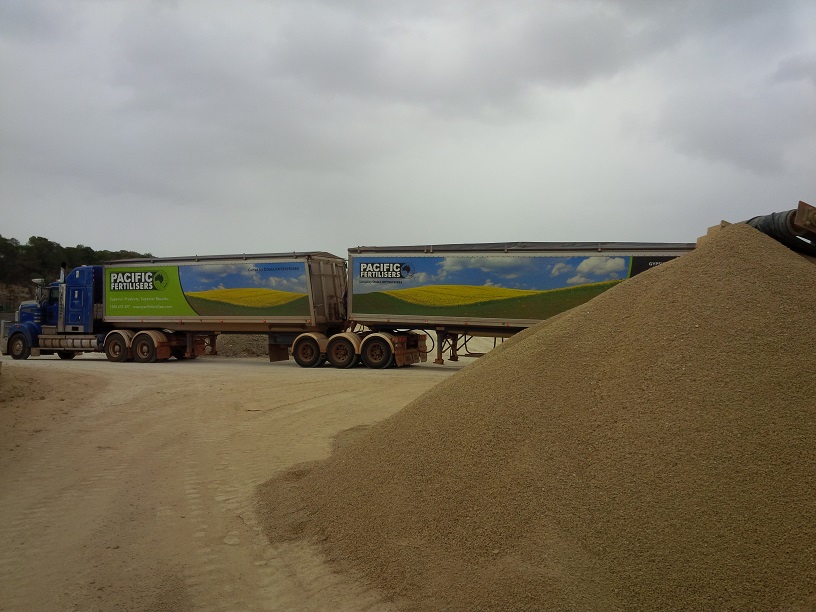
Pacific Fertiliser sells soft rock phosphate from its plant in Cowra NSW. We also offer organic and sustain single super alternatives call SRP Sustain and SRP SutainR.
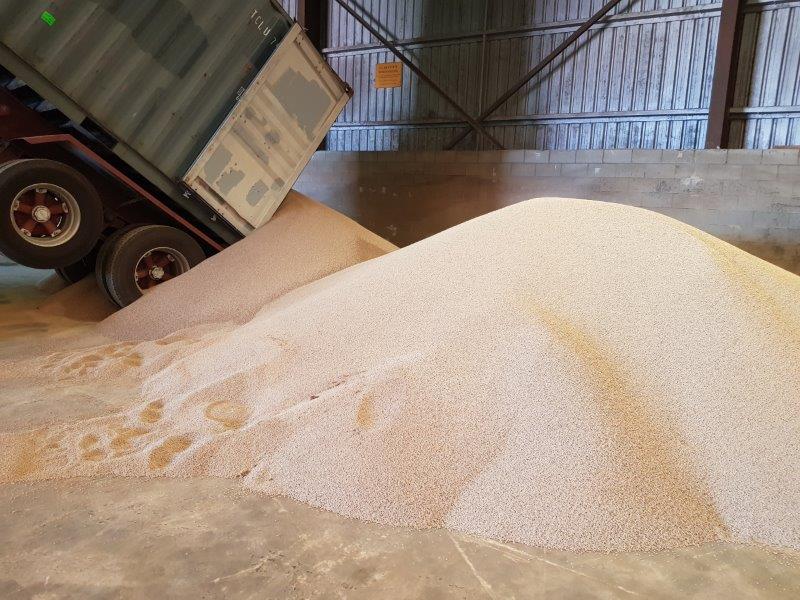
ORGANIC POTASSIUM FERTILISER – KMS Fertilizer is a soluble and highly bio-available form of Potassium, balanced with Magnesium and Sulphur. KMS nutrients are readily available and the product has a low chlorides content.
KMS Fertiliser 0-0-20-16 + 7% Mg
KMS dissolves slowly reducing leaching losses making it a highly effective during the growing period. The slow release rate also increases nutrient efficient fertiliser with good environmental performance.
The KMS Fertiliser product is certified organic and is suitable to blend with other fertilisers, minerals and trace elements.

Around the end of the First World War, Albert Howard & his wife were convinced that soil was not simply a base for chemical additives. It was an intricate living system that required a wildly complex mix of nutrients in plant and animal waste: harvest leftovers, manure. The Howards summed up their ideas in what they called the Law of Return: “the faithful return to the soil of all available vegetable, animal, and human wastes.” We depend on plants, plants depend on soil, and soil depends on us. Howard’s 1943 Agricultural Testament became the founding document of the organic farming movement.
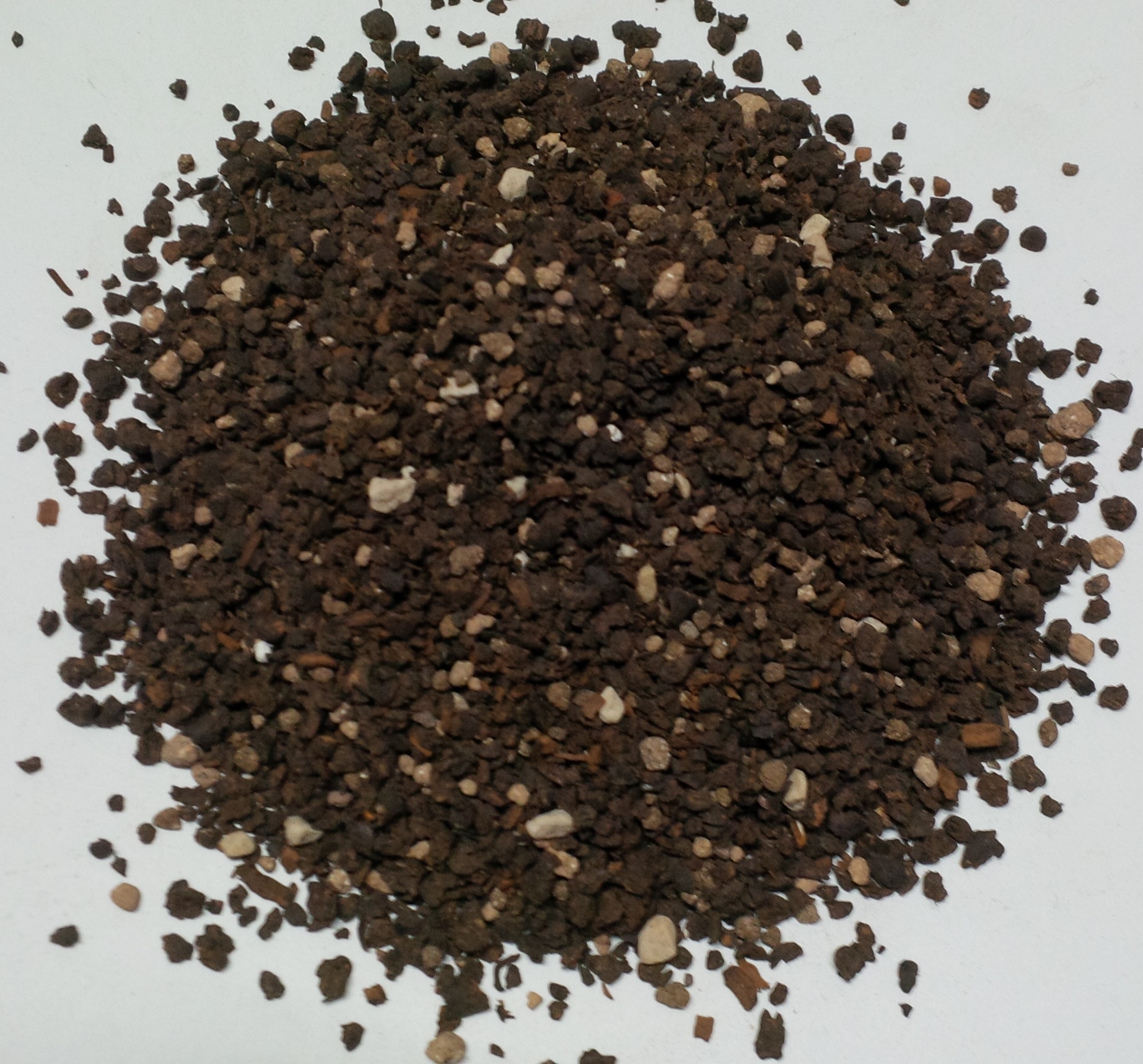
Pacific Fertiliser has added a new product to the range – Pelletised Manure or granular manure.
This high quality product is a made from a blend of chicken manure, blood & bone, potash, phosphate rock and other trace elements.
General specs – N 3.5%, P 2%, K 4%, S 3.1%, Ca 6%, Mg 1%
Sizing 2-4mm suitable for air seeder application.

Organic Passion – Landline Episode on organic farming and soft rock phosphate application

Pacific Fertiliser supplies a lot of organic products and blends suitable for organic agriculture.

Pacific Fertiliser releases its new RPR2 phsophate rock product.
The RPR2 product is sub 2mm natural phosphate rock.
The finer grade RPR makes it perfect for applications where high solubility and fast uptake is critical.


Pacific Fertiliser releases a new natural aerial grade phosphate rock product ex Brisbane.
The RPR210 is a 2-10mm granular high quality soft rock phosphate is suitable for aerial spreading.


Agricultural production removes plant nutrients; therefore, these must be replaced to sustain production. Phosphorus (P) and nitrogen (N) are perhaps the two nutrients of greater importance because Australian soils are inherently low in these elements. In the case of P, reactive phosphate rock (RPR) is the most practical fertiliser to replace P in broad-acre organic farming (Penfold 2000). For N, the optimal replacement strategy is legume N2 fixation; however, this process is highly dependent on P nutrition (Donald and Williams 1956). Hence, replacing P is crucial to sustaining productive organic cropping systems.
Phosphate rock (PR) is an allowed input for managing phosphate fertility on organic farms and is potentially suitable for mildly acidic to strongly acidic soils, because acidity is required to breakdown the phosphate rock to release P in a form that is available to plants. However, PR is generally only effective under substantially higher rainfall conditions than occur in the southern cropping regions of Australia, where previous work has sometime found it to be ineffective. In many soils, elemental sulphur (S) is naturally oxidised by soil bacteria to produce acid. Mixing PR with S may thus have a positive role in improving the effectiveness of PR in the southern cropping areas.

PacFert releases a new blended product called REMAP. A blend containing Urea, DAP, Rock Phosphate, Lime and Gypsum. REMAP has good levels of N, P, K, S and Ca.
Which provides you with a good base of soil nutrients in a single low cost application.
| PRODUCT | Nitrogen (N) | Phosphorous (P) | Potassium (K) | Sulphur (S) | Calcium (Ca) |
| % w/w | % w/w | % w/w | % w/w | % w/w | |
| REMAP | 18+ | 2+ | 1+ | 1.5% | 6+ |

BENEFITS OF DIRECT APPLICATION PHOSPHATE ROCK
Organic farming is the fastest growing sector of the global economy. Australia is the largest organic producer globally with 12 million hectares under organic cultivation. Pacific Fertiliser’s organic phosphate fertiliser is environmentally and nutritionally superior to chemical fertilisers and can be used on a wide variety of crops and pastures.
Organic fertilisers based on rock phosphate such as PacFerts’s products offer several advantages over chemically processed soluble fertilisers such as superphosphate.
• Organic fertilisers slowly release nutrients into the soil matching the speed at which the nutrients are being absorbed by the plants.
• Phosphate rock has the ability to restore microelemental and microbial soil balance which in turn leads to less reliance on artificial fertilisers and better crop yields.
• Use of organic phosphate instead of chemically processed phosphate avoids the serious environmental degradation caused by increased concentrations of fertilisers in the ground water, the rivers and the coastal waters. Use of organic phosphate rock reduces the risk of harmful accumulation of nutrients in the soil and reduces soil salinity problems
• Plants grown on organic phosphate rock fertiliser have a better nutritional quality.
• Because of phosphate rock’s unique chemical composition, incorporation of phosphate rock into the soil enhances its biological activity and increases soil carbon (C) accumulation, leading to improved soil fertility and restoration of its physical and chemical properties.
• Organic phosphate rock is a source of several nutrients other than P. Rock phosphates are usually applied to replenish soil P status, but phosphate rock also provides other nutrients not present in soluble fertilisers. Application of organic phosphate has a potential trigger effect on plant growth and crop yields as a result not only of phosphorus release but also because of phosphate rock’s effect on increasing exchangeable calcium (Ca) and reducing aluminium saturation.
• Phosphate rocks for direct application can be more efficient than artificial fertilizers in terms of phosphorus (P) recovery by pants under certain conditions. Based on the unit cost of P, natural phosphate rock is usually the cheapest.
• Phosphate rocks are natural minerals requiring no metallurgical processing. Their direct application avoids production of polluting wastes such as phosphor-gypsum and greenhouse gases, thus resulting in energy conservation and protein environment.
Pacific Fertiliser also produces other organic compliant natural mineral fertilisers and soil conditioners.

Note: Soft Rock Phosphate does not contain soluble phosphate, therefore the phosphate availability is a function of acid soil conditions and/or active soil biology, i.e. soft rock phosphate becomes available rapidly in acidic soils. In alkaline soils, it should be combined with REGYP compost, humates, microbial agents. Application rates are generally in the range of 500kg to 1500kg per hectare (Ha).
