Tag: gypsum spreading

  • General Dam Construction using Gypsum Stabilisation

    General Dam Construction using Gypsum Stabilisation

    Pacific Fertiliser provides products for large dam and batter construction works.

    For over a decade we have been supplying gypsum and bentonite and other products for dam construction projects in NSW & QLD.  In some areas we are also spreading products before they are incorporated into the soil for stabilisation and other desired outcomes such as dam sealing and rehabilitation.
    Below is a very general example of how gypsum can be used used during dam construction to stabilise the soil to be used in the dam wall.

    Firstly the soil material to be treated before use in the dam wall construction, is placed on a pad via scrappers to a depth of 300mm. Then our bulk gypsum is spread over the soil at a calculated application rate (a general app rate to stabilise soil over the numerous dam projects has been approx 2-3% w/w gypsum per cubic meter of soil).

    Once the gypsum is spread over the pad, the client uses large pulverisers to incorporate and blend the gypsum with the soil down to 300mm. Once blended, the soil mix is removed by scrapers to place it in the desired location for the construction of the dam walls and batters.

    Pacific Fertiliser has worked on stabilisation projects throughout NSW and QLD for both civil and mining industries on dam, batter, rail and road works.

    Note: this is a general example. Gypsum application rates are determined using civil engineers and tested of the actual soil to be used in the wall construction. Gypsum application methods will also change depending on available space and equipment.


  • Western Sydney Dam Works

    Western Sydney Dam Works

    Pacific Fertiliser is providing products and services to large Western Sydney Civil projects for large dam, batter and road works.

    We are not only supplying and delivering lime, gypsum and bentonite, but we are also spreading products before they are incorporated into the soil for stabilisation and other desired outcomes such as dam sealing and rehabilitation.
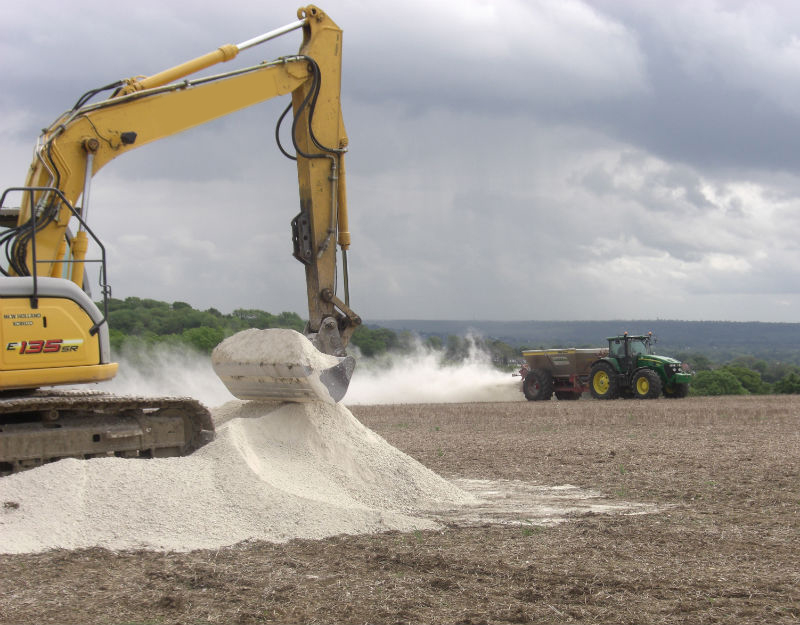
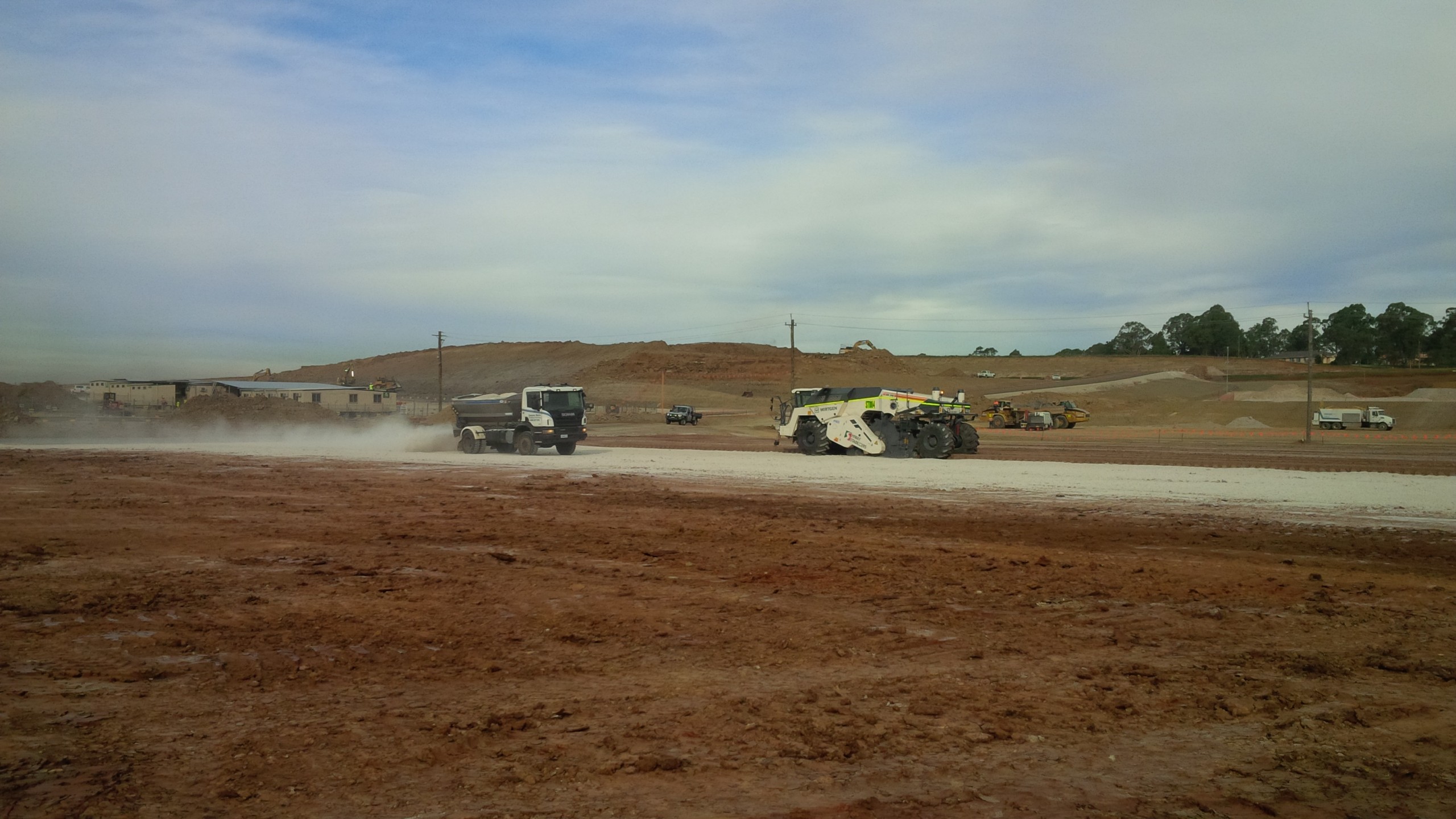
    Below is our bulk gypsum being spread onto the soil being treated before placement onto the dam wall and batters. The general blend to stabilise the soil, is 2-3% w/w gypsum per cubic meter of soil and this is carried out using a precision spreader to apply the gypsum of the soil to be treated. Then using large pulverisers the gypsum is incorporated and blended with the soil down to 300-350mm. Once blended, the soil mix is removed by scrapers to place it in the desired location for the construction of the dam walls and batters.

    Pacific Fertiliser has worked on stabilisation projects throughout NSW and QLD for both civil and mining industries on dam, batter, rail and road works.


  • New Spreader Added to the Fleet

    New Spreader Added to the Fleet

    Pacific Fertiliser has added a new spreader to the fleet.

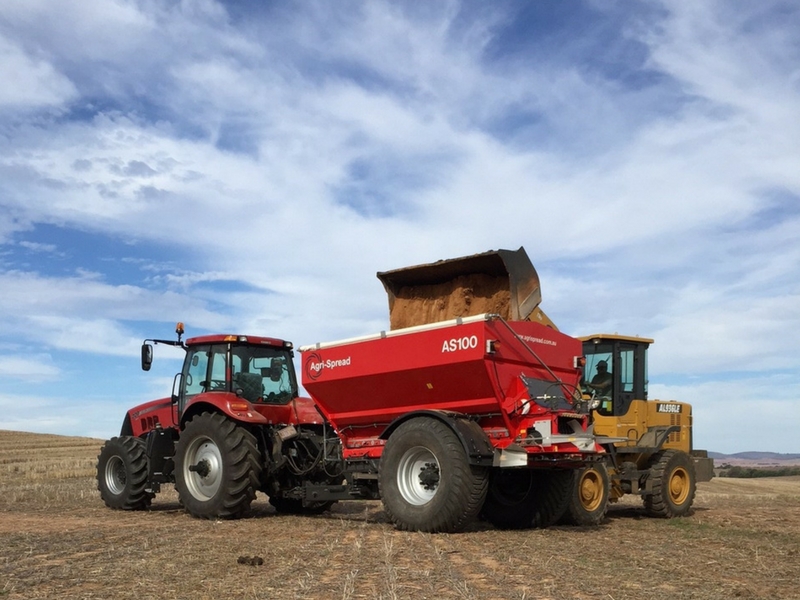
    The new Agri-Spread AS100 Spreader is a 13t spreader with variable rate controller on 3m wheel centres.

    The spreader will be based at Gatton in the heart of the Lockyer Valley in-between Brisbane & Toowoomba.

    The spreader is a perfect fit to apply prescription maps generated from agronomists, Swat Maps or our Veris Mapping Trailer.

    This allows Pacific Fertiliser to:

    • Supply and spread bulk gypsum in the lockyer valley
    • Supply and spread bulk lime in the lockyer valley
    • Supply and spread bulk manure in the lockyer valley

  • Peterbuilt Visit

    Peterbuilt Visit

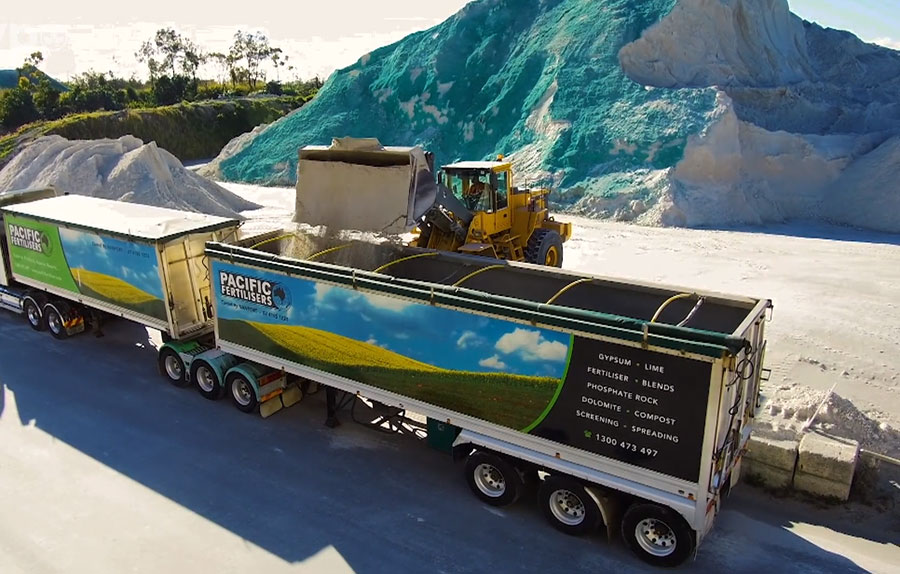
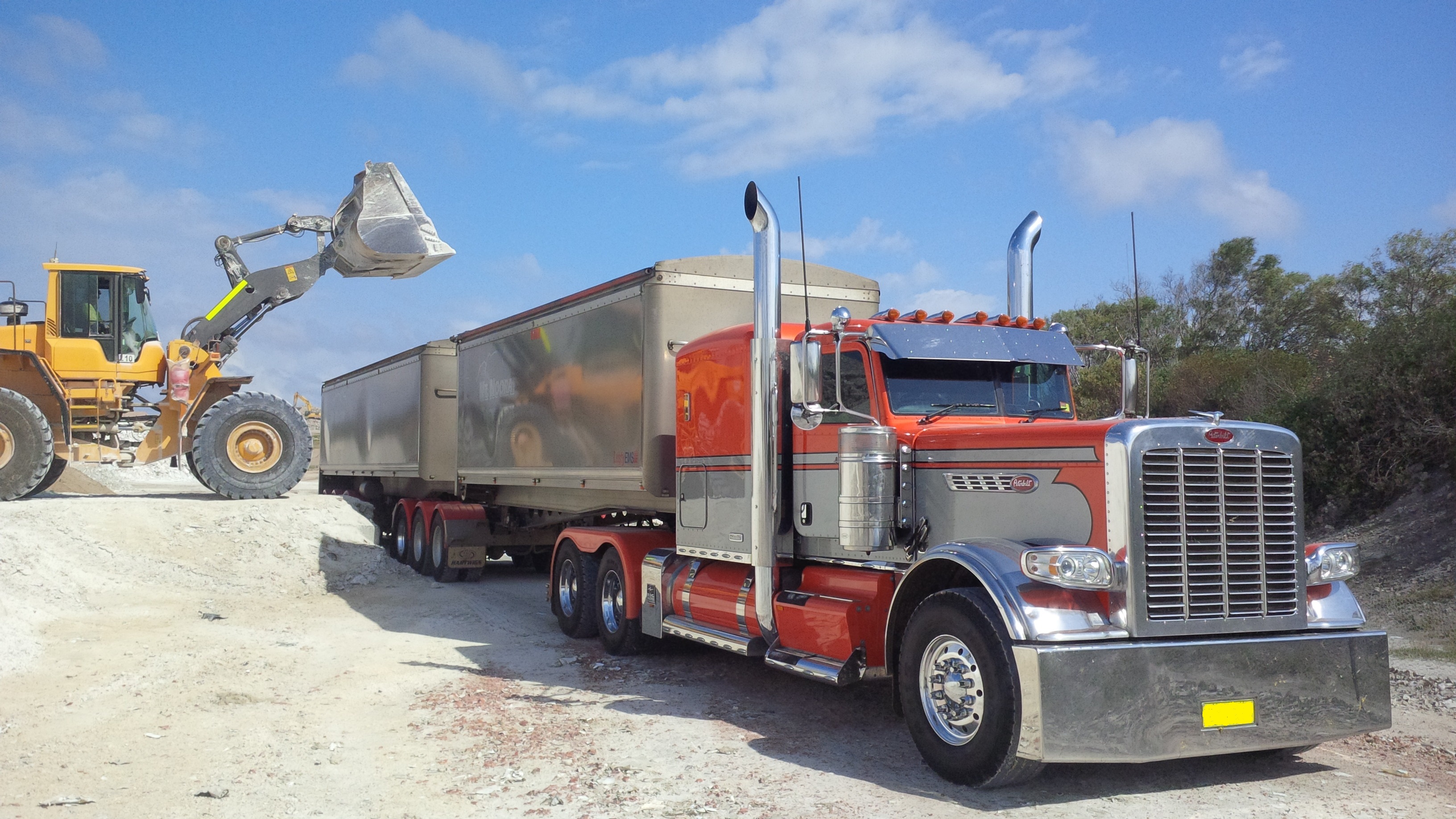
    A nice looking Peterbuilt rolls through site to get loaded with grade 1 gypsum.


  • Cowra Fertiliser Deliveries & Grain Cartage

    Cowra Fertiliser Deliveries & Grain Cartage

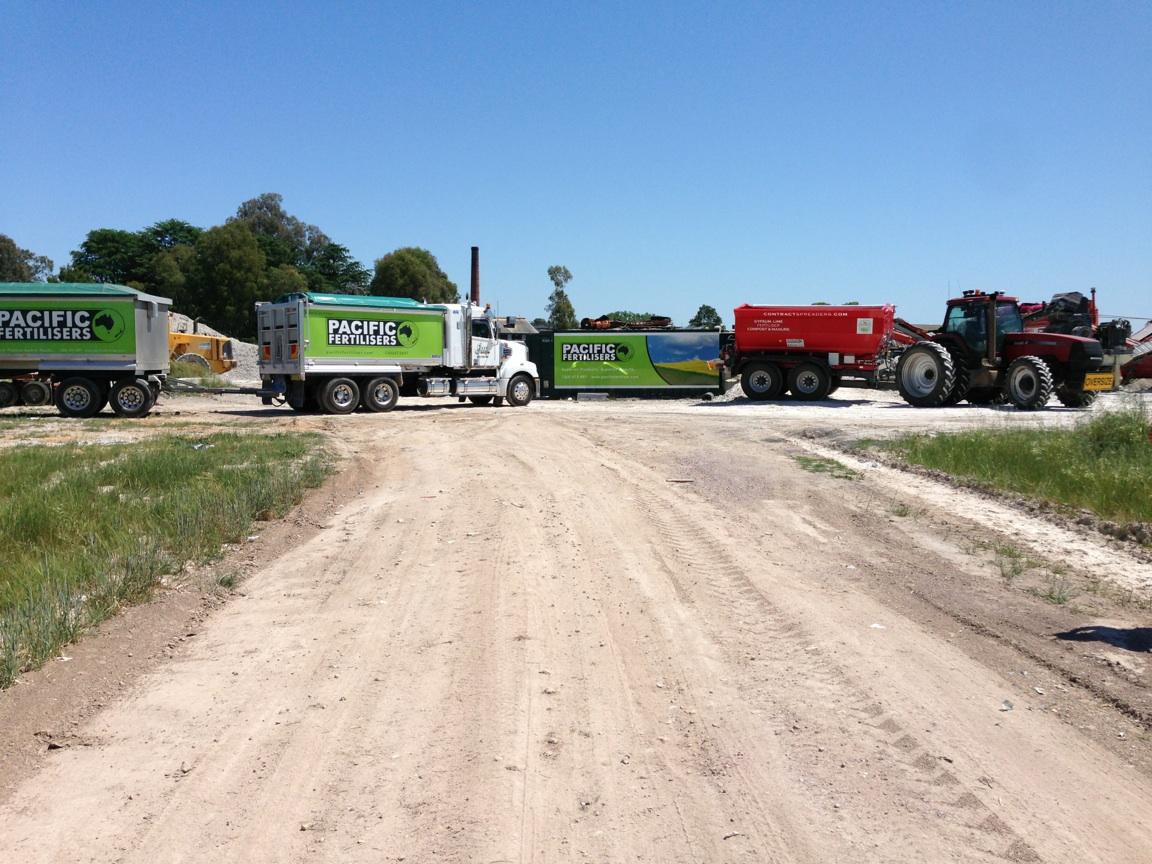
    Pacific Fertiliser has added a new truck to the fleet to service the Cowra and Central West NSW customers.

    We have a 36′ tipper and float to move product and equipment around.

    We also have a fertiliser conveyor for spreader loading, to ensure that no fertiliser is wasted when delivered and spread on farm.


    Pacfert RT tipping


  • New Tractor to the Spreading Fleet

    New Tractor to the Spreading Fleet

    Contract Spreaders have just purchased a Case MX335 tractor to tow the bigger spreaders in the fleet, which can carry up to 21 tonne of ag lime.

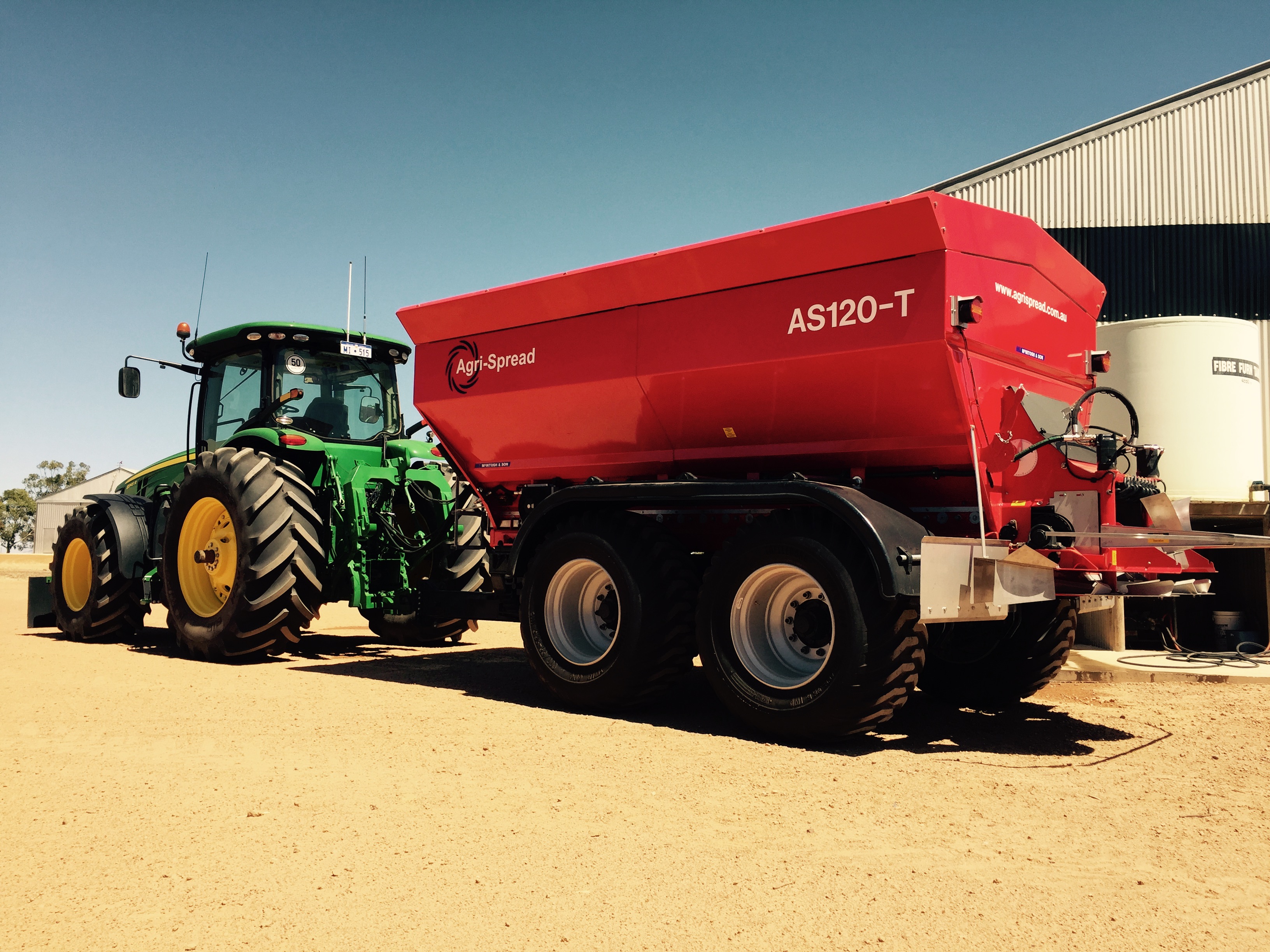
    The new Case MX 335 tractor (335hp) fitted with a Trimble system coupled to the Agrispread AS120T spreader with an AS controller can provide very accurate spreading of both rate and spread pattern. The state of the art system allows variable rate application maps to be uploaded into the machine for precision spreading jobs.

    Variable rate lime and gypsum spreading can save farmer input costs and increase productivity for their land through applying the correct amount of product where it is required.

    With large hoppers, upto 36m spread width on urea and a large front end loader, Contract Spreaders can cover a lot of country in a day for their customer.

    www.contractspreaders.com

    precision spreaders
    contract spreader

  • Brisbane Spreading

    Brisbane Spreading

    Pacific Fertiliser can offer agricultural spreading options in the Brisbane, Gold Coast, Lockyer, Darling Downs and Burnett regions.

    We have sophisticated gear with GPS guidance, variable rate controllers and banding options for hort/row crops.

    lime spreading

    Spreader Accuracy:
    Contract Spreader’s Agrispread AS120T and tractors fitted with the Trimble system provide strong data feedback during operation. It allows agronomists and farmers to send variable rate application maps to the machine.

    Variable rate lime and gypsum spreading can save farmer input costs and increase productivity for their land through applying the correct amount of product where it is required.

    The system offers real-time data reporting providing traceability of where the spreader is and check its application rates and other diagnostics such as total weight spread etc.

    It gives the grower absolute confidence in what the spreading contractor is doing and when it is doing it and gives us complete oversight of the job.

    With a large 16m3 hopper and 36m spread width on urea, the AS120T spread can cover a lot of country in a day.

  • Cowra Spreading

    Cowra Spreading

    Just getting ready for some fertiliser spreading work in Cowra.

    lime spreading

    Spreader Accuracy:

    Contract Spreader’s Agrispread AS120T and Case 335 tractor is fitted with Trimble system and AS controller that provide strong data feedback and control during operation. It allows agronomists and farmers to send variable rate application maps to the machine. I think will see a quick take up of variable rate lime and gypsum spreading to save farmer input costs and increase productivity.

    The system also offers real-time data reporting providing scrutiny of where the spreader is and check its application rates and other diagnostics. It gives the grower absolute confidence in what the spreading contractor is doing and when it is doing it and gives us complete oversight of the job.

    With a large 16m3 hopper and 36m spread width on urea, the AS120T spread can cover a lot of country in a day.

  • Importance of Urea on Soil Organic Carbon

    Importance of Urea on Soil Organic Carbon

     Long-Term mineral Key to Soil Microbial Biomass

    Conclusions from a review of extensive international research are not surprising but extremely significant.

    Soil organic carbon increased by 13 per cent and microbial biomass increased by 15% in the average of 64 long-term international research studies using mineral nitrogen fertiliser applied to annual crops, when compared with no nitrogen fertiliser used.

    Results of the study based on field trials were published in the journal Soil Biology and Biochemistry, Volume 75.
    The article, Long-term Effects of Mineral Fertilisers on Soil Micro- organisms – A Review, was written by Daniel Geisseler and
    Kate Scow, Agricultural

    Sustain ability Institute, University of California. Microbial (fungi, bacteria archaea) biomass is the part of the .
    living organism part of soil organic matter. Soil organic carbon includes organic materials of plant and animal origin at all stages of
    decomposition as well as the micro-organisms. Levels of microbial biomass and organic carbon are regarded across the world scientific community as strong, measurements for assessing soil health and quality.

    Generally speaking the higher the figures the healthier and greater the soil quality. The research reviewers examined results from long-term cropping trials conducted across the world, including Australia, USA, Europe, Africa, South America, Canada, China, Japan and India. The longer experiments ran, especially after 20 years, the greater the gains in microbial biomass. Some experiments had been running for more than 100 years, with the longest at 135 years, and the average across all experiments was 37 years.

    Research from various sources has often shown that correcting soil deficiencies like nitrogen in cropping systems commonly results in greater yields and greater biomass production. Greater biomass means more plant residues, both roots and above ground litter, returns to the soil for future rotting down; food for soil organisms and to build soil organic matter (which is a large part of soil organic carbon). Therefore the conclusions of the review are significant. Soil acidity was a critical  consideration and if not addressed the study noted worked against increasing soil microbial biomass.

    Applying ammonium or urea fertilisers do tend to be acidifying, especially on lower pH soils and unless addressed can impact on rising aluminium toxicity that can adversely affect not only soil properties like microbial ‘biomass but also productivity. Aluminium and manganese become more soluble (available) and may reach toxic levels to reduce plant growth below pH 4.8. At or below this pH aluminium will reduce root growth while manganese disrupts photosynthesis and other functions of growth. Phosphorous (P) fixation with aluminium is more commonly seen from pH 4.5 to 6 and results in substantial lock-up of P.

    Addressing soil acidity via liming, especially in soils below pH 5 is a common world practice and where used in the research eliminated negative impacts related to low pH. Microbial community composition was more influenced by yearly differences and different sampling times than by fertiliser on no fertiliser.

    Rates of nitrogen used, applied annually, in assessing the impacts of nitrogen fertiliser use across all the experiments were around the 130 kilograms a hectare  of N (or about 280kg/ha urea). Soils were tested across the 0 cm to 20cm layer.

    Written by Bob Freebairn,  an Agricultural Consultant at Coonabarabran for The Land Newspaper April 2015.

    AS120