Tag: sunstate gypsum

  • Granular Gypsum

    Granular Gypsum

    Pacific Fertiliser produce a granular gypsum product suitable for air seeder and aircraft application.

    The 2-4mm granular gypsum is made locally from blending various domestic sources of natural gypsum together to make consistent and stable particles. We then re screen the product after granulation to ensure there are no fines present.

    For sport turf applications we also produce a 1-2mm gypsum product.

    sowing

  • Brisbane Spreading

    Brisbane Spreading

    Pacific Fertiliser can offer agricultural spreading options in the Brisbane, Gold Coast, Lockyer, Darling Downs and Burnett regions.

    We have sophisticated gear with GPS guidance, variable rate controllers and banding options for hort/row crops.

    lime spreading

    Spreader Accuracy:
    Contract Spreader’s Agrispread AS120T and tractors fitted with the Trimble system provide strong data feedback during operation. It allows agronomists and farmers to send variable rate application maps to the machine.

    Variable rate lime and gypsum spreading can save farmer input costs and increase productivity for their land through applying the correct amount of product where it is required.

    The system offers real-time data reporting providing traceability of where the spreader is and check its application rates and other diagnostics such as total weight spread etc.

    It gives the grower absolute confidence in what the spreading contractor is doing and when it is doing it and gives us complete oversight of the job.

    With a large 16m3 hopper and 36m spread width on urea, the AS120T spread can cover a lot of country in a day.

  • What is Gypsum

    What is Gypsum

    Gypsum (CaSO4· 2H2O) is a soft white, grey, brownish or slightly pink mineral consisting of hydrated calcium sulphate also know as calcium sulphate di-hydrate. It occurs mainly in sedimentary deposits and is used to for soil amelioration and in building construction materials.

    Gypsum is moderately water-soluble (~2.0–2.5 g/l at 25 °C) and, in contrast to most other salts, it exhibits retrograde solubility, becoming less soluble at higher temperatures.

    Gypsum is generally found in mineral and rock form, but there is also recycled, synthetic and byproduct forms of gypsum.  Mined gypsum is a very soft mineral and it can form very large colored crystals.  Natural gypsum is found in many parts of the world. Gypsum deposits lie in flat beds of about six to eight feet in thickness, and are often inter-layered with limestone or shale. Gypsum deposits were formed millions of years ago when salt water oceans covered most of the earth, and as they receded, may inland “dead” seas were formed which, as evaporation continued, became more and more salty. As those salts precipitated, they formed various compounds in turn, one of which was gypsum. As millions of years passed, these salt deposits combined with decayed vegetation and other minerals, and eventually the result was stratified rock, with layers of gypsum and layers of limestone alternating, the whole covered over with many feet of glacial deposits. The result is the accumulation of large beds of sedimentary gypsum near old salt lakes and inland river beds.


    The main types of gypsum in the market place for agricultural, civil and industrial application are:

    Natural gypsum: is mined from the ground as a mineral and sold for industrial, medical and agricultural uses. Generally the mined gypsum will be selenite gypsum which is an opaque sandy crystal gypsum. There are various grades of mined gypsum and it is essential you determine you are getting the best bang for your buck. The easiest method of comparison is gypsum purity or each gypsum source available to you.

    Recycled Gypsum: is derived from plasterboard waste and is a high quality source of gypsum. The product has a granular feel making it easier to spread. The granules porous structure increases the surface area making the recycled gypsum more soluble. Read more.

    Synthetic gypsum (Not Sold by PacFert): industrial gypsum, FGD (Flu Gas Desulphurised Gypsum) and DSG (Desulphurised Gypsum) are all names for gypsum which are created by through chemical processes and not mined virgin product. Synthetic gypsum is most typically created in scrubbers, using lime (Ca), in coal fired power plants to clean the sulphur (SO) from the smoke stacks. The lime and sulfate combine and make synthetic gypsum (CaSO4· 2H2O) which is a high quality and very pure gypsum material. Chemically this gypsum is identical to natural gypsum.

    Phosphogypsum (Not Sold by PacFert): refers to the gypsum formed as a by-product of processing phosphate ore into fertilizer with sulfuric acid, such as Phosphate Hill in Central West QLD. REGYP DOES NOT SELL Phosphogypsum in Australia. Phospho gypsum is produced from the fabrication of phosphoric acid by reacting phosphate rock with sulfuric acid. Phosphogypsum does contain moderate levels of heavy metals including cadmium and REGYP recycled gypsum products DO NOT, so the two should not be confused. Phosphogypsum is radioactive due to the presence of naturally occurring uranium and radium in the phosphate ore. Marine-deposited phosphate typically has a higher level of radioactivity than igneous phosphate deposits, because uranium is present in seawater.

    Comparing Gypsum Products: Please follow the link for a complete gypsum comparison report.

  • Buying Gypsum

    Buying Gypsum

    When buying gypsum from any supplier please ask the following questions when requesting delivered or ex works prices.

    • Price $/tonne
    • Do you have a recent analysis report (less than 6 months old) including
      • Gypsum purity (%)
      • Calcium and sulphur content (%)
      • Sizing (top and mean size)
      • Salt content %
      • Moisture content %

    Gypsum Quality Classification:

    • Premium Grade Gypsum described as : Gypsum must contain a minimum of 89% purity, 16.5% sulphur (S) and a minimum of 21.0% Calcium (Ca).
    • Grade 1 Gypsum described as : Gypsum must contain a minimum of 81% purity, 15.0% sulphur (S) and a minimum of 19.0% Calcium (Ca).
    • Grade 2 Gypsum described as : Gypsum must contain a minimum of 67% purity, 12.5% sulphur (S) and a minimum of 15.5% Calcium (Ca).
    • Grade 3 Gypsum described as : Gypsum must contain a minimum of 54% purity, 10.0% sulphur (S) and a minimum of 12.5% Calcium (Ca).

               Purity of gypsum is calculated by dividing the Sulphur content % by 0.186 (i.e. gypsum with 100% has 18.6% Sulphur). 

    Bulk-gypsum

  • Pacific Fertiliser Blends

    Pacific Fertiliser Blends

    Pacific Fertiliser can blend and deliver tailored NPK fertiliser and mineral products to suit your soil and cropping requirements.

    pacific fertiliser

  • Gypsum Comparison Results 2015

    Gypsum Comparison Results 2015

    Pacific Fertiliser recently undertook detailed research into the bulk agricultural gypsum products available on the eastern seaboard of Australia. This research continues on from the NSW Department of Primary Industries work in 1996 which was reported in the AgFact AC.10 (Agdex 514) document.

    The gypsum samples were obtained from various agricultural gypsum sources either ex mine pit or from product landed on the farm. Pacific Fertiliser and REGYP gypsum products were also tested during the research and these were taken from finished product stockpiles.

    The main items we tested for were gypsum purity, sizing and solubility. The results enable us to benchmark our products against others, but also to help customers in their evaluation of which gypsum to use when they are looking to purchase gypsum for their farm or project.

    When testing for gypsum solubility, we employed the method used in the AgFact AC.10 paper. This test method is more indicative of what happens in the paddock rather than the normal method to test solubility, where gypsum samples are finely ground up before being analysed. Due to the river bed gypsum having higher salt contents we had to adjust the solubility results to reflect the true gypsum solubility.

    If you have any questions or would like to view the full report please feel free to call 1300473497 or visit our website www.pacificfertiliser.com 

    Gypsum Comparison Sept2015

    Test Laboratory:
    Pacific Fertiliser commissioned Cement Australia to do the gypsum analysis work for our research. Cement Australia’s laboratory in Darra QLD is NATA approved and very proficient and experienced in testing gypsum and other minerals.

    Test Methods:
    Gypsum Purity:-                      Calculated from Sulphur (S) content. (18.6% Sulphur is 100% CaSO4.2H2O)
    Sulphur Content: –                  X-ray fluorescence (XRF)
    Total Calcium:-                         XRF
    Total Oxides:-                            XRF
    Moisture Content:-                 AS 4489.8.1, modified for gypsum by limiting heat to 40ºC for 24 hrs.
    Particle Size:-                             Analysis Dry sieve
    Gypsum Solubility:-                As per the method used in the NSW AGFACTS AC.10. Solubility is expressed as electrical conductivity (EC) of solution obtained by adding the equivalent of 10g of pure gypsum (CaSO4.2H2O) to 1 litre of demineralised water. This solution is gently shaken (20 times end over end) and placed in a centrifuge for 10 minutes. The unit of electrical conductivity is dS/m.
    Adjusted solubility:-                Pacific Fertiliser added a modified column to the analysis results in the above table, to allow for the effect on electrical conductivity in the gypsum samples with a higher salt content. The measured electrical conductivity (EC) of a solution is influenced by the concentration and composition of dissolved salts.  In the 1996 results Bourke solubility was 0.4 dS/m and Balranald was 1.0 dS/m.

    Please download a full copy of the research report here (13mB).


  • Fine Gypsum Products Brisbane

    Fine Gypsum Products Brisbane

    Pacific Fertiliser is trailing a new gypsum refining process to offer a gypsum product ex Brisbane that has the following characteristics: Gypsum purity much higher than local mined sources with a solubility and fineness similar to super fine grade gypsum.

    The Mine2 gypsum product is available ex Brisbane. Pacific Fertiliser continues to sell its other gypsum products from Port of Brisbane, Dinmore and Pinkenba.

    NATA certified test results are available for the Mine2 and the rest of the PacFert gypsum range on request.

    Please contact Pacific Fertiliser for information and samples.

    brisbane gypsum

  • QLD Gypsum Products

    QLD Gypsum Products

    Pacific Fertiliser supplies numerous gypsum products into the QLD market.

    The gypsum products include:
    – QLD Mined gypsum
    – QLD Screened mined gypsum
    – QLD Milled gypsum
    – QLD superflocc gypsum
    – QLD Prilled gypsum & QLD Granulated gypsum
    – QLD gypsum blends (with products like phosphate, lime, elemental sulphur etc)
    – QLD Recycled gypsum

    Pacific Fertiliser supplies gypsum to the QLD market for agricultural, mining and civil engineering applications. The gypsum products are available in bulk and bag.

    gypsum

    Pacificfertiliser

  • Brisbane Gypsum

    Brisbane Gypsum

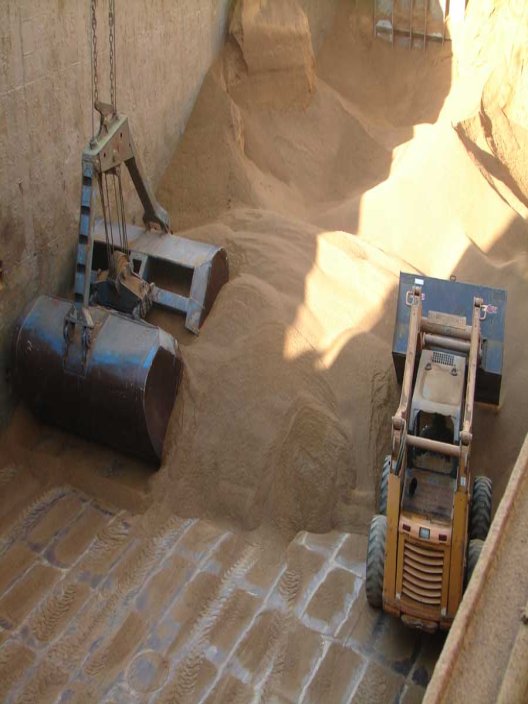
    PacFert can offer mined gypsum loading from bogie loads to road train trailers and B-doubles from Pinkenba and Port of Brisbane in QLD.

    Other special products and blends come out of the Ipswich site.

    We can package the natural high quality grade 1 gypsum with competitive bulk transport and spreading services.

    Our gypsum is 95+% pure, ensuring you aren’t buying, transporting and spreading a large percentage of dirt or other impurities.