Tag: vic gypsum

  • Granular Aerial Grade Gypsum

    Granular Aerial Grade Gypsum

    Pacific Fertiliser releases a new Granular aerial grade gypsum product.

    To compliment the existing 2-4mm granular gypsum and REGYP’s SSG10 recycled gypsum products, the larger 4-12mm granules offer the following:

    • lower cost compared to 2-4mm gypsum granules
    • larger granules assist with product flow in aircraft hoppers and small conical spreaders
    • granular gypsum uses super fine grade natural gypsum to make the larger granules so once wet the solubility is still good
    • lower dust compared to powdered product
    • ability to blend it with other granulated products and liquid biology stimulants

    granular gypsum

  • Granular Gypsum

    Granular Gypsum

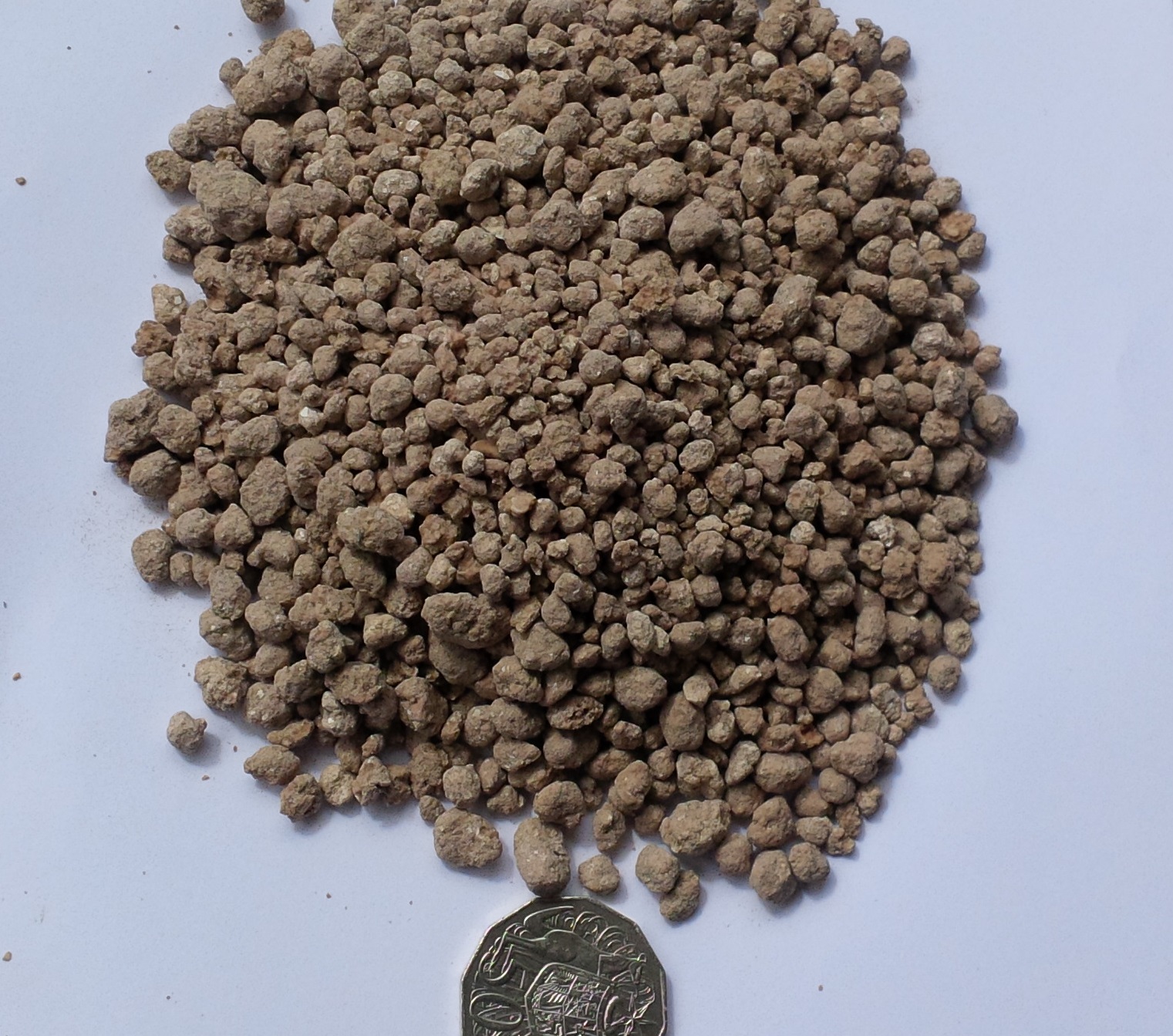
    Pacific Fertiliser produce a granular gypsum product suitable for air seeder and aircraft application.

    The 2-4mm granular gypsum is made locally from blending various domestic sources of natural gypsum together to make consistent and stable particles. We then re screen the product after granulation to ensure there are no fines present.

    For sport turf applications we also produce a 1-2mm gypsum product.

    sowing

  • Brisbane Spreading

    Brisbane Spreading

    Pacific Fertiliser can offer agricultural spreading options in the Brisbane, Gold Coast, Lockyer, Darling Downs and Burnett regions.

    We have sophisticated gear with GPS guidance, variable rate controllers and banding options for hort/row crops.

    lime spreading

    Spreader Accuracy:
    Contract Spreader’s Agrispread AS120T and tractors fitted with the Trimble system provide strong data feedback during operation. It allows agronomists and farmers to send variable rate application maps to the machine.

    Variable rate lime and gypsum spreading can save farmer input costs and increase productivity for their land through applying the correct amount of product where it is required.

    The system offers real-time data reporting providing traceability of where the spreader is and check its application rates and other diagnostics such as total weight spread etc.

    It gives the grower absolute confidence in what the spreading contractor is doing and when it is doing it and gives us complete oversight of the job.

    With a large 16m3 hopper and 36m spread width on urea, the AS120T spread can cover a lot of country in a day.

  • What is Gypsum

    What is Gypsum

    Gypsum (CaSO4· 2H2O) is a soft white, grey, brownish or slightly pink mineral consisting of hydrated calcium sulphate also know as calcium sulphate di-hydrate. It occurs mainly in sedimentary deposits and is used to for soil amelioration and in building construction materials.

    Gypsum is moderately water-soluble (~2.0–2.5 g/l at 25 °C) and, in contrast to most other salts, it exhibits retrograde solubility, becoming less soluble at higher temperatures.

    Gypsum is generally found in mineral and rock form, but there is also recycled, synthetic and byproduct forms of gypsum.  Mined gypsum is a very soft mineral and it can form very large colored crystals.  Natural gypsum is found in many parts of the world. Gypsum deposits lie in flat beds of about six to eight feet in thickness, and are often inter-layered with limestone or shale. Gypsum deposits were formed millions of years ago when salt water oceans covered most of the earth, and as they receded, may inland “dead” seas were formed which, as evaporation continued, became more and more salty. As those salts precipitated, they formed various compounds in turn, one of which was gypsum. As millions of years passed, these salt deposits combined with decayed vegetation and other minerals, and eventually the result was stratified rock, with layers of gypsum and layers of limestone alternating, the whole covered over with many feet of glacial deposits. The result is the accumulation of large beds of sedimentary gypsum near old salt lakes and inland river beds.


    The main types of gypsum in the market place for agricultural, civil and industrial application are:

    Natural gypsum: is mined from the ground as a mineral and sold for industrial, medical and agricultural uses. Generally the mined gypsum will be selenite gypsum which is an opaque sandy crystal gypsum. There are various grades of mined gypsum and it is essential you determine you are getting the best bang for your buck. The easiest method of comparison is gypsum purity or each gypsum source available to you.

    Recycled Gypsum: is derived from plasterboard waste and is a high quality source of gypsum. The product has a granular feel making it easier to spread. The granules porous structure increases the surface area making the recycled gypsum more soluble. Read more.

    Synthetic gypsum (Not Sold by PacFert): industrial gypsum, FGD (Flu Gas Desulphurised Gypsum) and DSG (Desulphurised Gypsum) are all names for gypsum which are created by through chemical processes and not mined virgin product. Synthetic gypsum is most typically created in scrubbers, using lime (Ca), in coal fired power plants to clean the sulphur (SO) from the smoke stacks. The lime and sulfate combine and make synthetic gypsum (CaSO4· 2H2O) which is a high quality and very pure gypsum material. Chemically this gypsum is identical to natural gypsum.

    Phosphogypsum (Not Sold by PacFert): refers to the gypsum formed as a by-product of processing phosphate ore into fertilizer with sulfuric acid, such as Phosphate Hill in Central West QLD. REGYP DOES NOT SELL Phosphogypsum in Australia. Phospho gypsum is produced from the fabrication of phosphoric acid by reacting phosphate rock with sulfuric acid. Phosphogypsum does contain moderate levels of heavy metals including cadmium and REGYP recycled gypsum products DO NOT, so the two should not be confused. Phosphogypsum is radioactive due to the presence of naturally occurring uranium and radium in the phosphate ore. Marine-deposited phosphate typically has a higher level of radioactivity than igneous phosphate deposits, because uranium is present in seawater.

    Comparing Gypsum Products: Please follow the link for a complete gypsum comparison report.

  • Gypsum Prospecting

    Gypsum Prospecting

    [fusion_builder_container type=”flex” hundred_percent=”no” equal_height_columns=”no” menu_anchor=”” hide_on_mobile=”small-visibility,medium-visibility,large-visibility” class=”” id=”” background_color=”” background_image=”” background_position=”center center” background_repeat=”no-repeat” fade=”no” background_parallax=”none” parallax_speed=”0.3″ video_mp4=”” video_webm=”” video_ogv=”” video_url=”” video_aspect_ratio=”16:9″ video_loop=”yes” video_mute=”yes” overlay_color=”” video_preview_image=”” border_color=”” border_style=”solid” padding_top=”” padding_bottom=”” padding_left=”” padding_right=””][fusion_builder_row][fusion_builder_column type=”1_1″ layout=”1_1″ background_position=”left top” background_color=”” border_color=”” border_style=”solid” border_position=”all” spacing=”yes” background_image=”” background_repeat=”no-repeat” padding_top=”” padding_right=”” padding_bottom=”” padding_left=”” margin_top=”0px” margin_bottom=”0px” class=”” id=”” animation_type=”” animation_speed=”0.3″ animation_direction=”left” hide_on_mobile=”small-visibility,medium-visibility,large-visibility” center_content=”no” last=”true” min_height=”” hover_type=”none” link=”” border_sizes_top=”” border_sizes_bottom=”” border_sizes_left=”” border_sizes_right=”” first=”true”][fusion_text]

    Pacific Fertiliser has been out to take gypsum samples of the exploration area in the Culgoa area. The initial results are promising.

    Gypsum available from a potential Culgoa gypsum mine would enable Pacific Fertiliser to sell back to Goondiwindi from the west of hebel and further to the north and south.

    The target area captures a lot of the irrigated cotton growing country as well as dry land grain growers, that Pacific Fertiliser’s Brisbane plant is a little too far from.

    The results from testing the Mulga Gypsum sampled within the exploration area will be compared with the recent eastern seaboard gypsum comparison undertaken by Pacific Fertiliser – see link.

    Gypsum exploration gypsum coring

    gypsum crust Gypsum mining

    [/fusion_text][/fusion_builder_column][/fusion_builder_row][/fusion_builder_container]

  • Pacific Fertiliser Releases a New Brochure

    Pacific Fertiliser Releases a New Brochure

    PacFert releases a new products brochure. The brochure contains a lot of the products we supply, however there are many more so please feel free to enquire if it is not on the website or in the brochure.

    Please download a copy of the new brochure:


    download


  • Sodic Soils Still Require Attenion

    Sodic Soils Still Require Attenion

    Putting the dollars into sodic soil management 

    Key Points of the GRDC article:
    – Sodicity is the presence of too much sodium (Na) in the soil.
    – Australia represents the majority of the world’s sodicity issues which can lead to a reduction in plant growth and grain yield as well as decreased soil structural ability.
    – Soil amelioration of sodic soil with gypsum has increased crop yields of wheat, chickpeas, sorghum and canola.
    – Opportunities exist for further research into the practical application of amelioration strategies such as gypsum and their potential cost/benefit to growers across a range of soils and environmental situations.
    – Like most cropping issues, growers and agronomists need to complement their knowledge of the underlying bio-physical systems with careful observation to craft a solution that is appropriate for individual situations.

    sowing

    Future research into sodic soils in Australia’s northern cropping belt should aim to equip growers with the decision-making tools to implement feasible and cost effective management strategies. Dr Neal Menzies from the University of Queensland’s School of Agriculture and Food Sciences believes that while the adverse effects of sodicity on plant growth are well documented, important knowledge gaps still remain in scientists’ understanding of sodic soils.

    Addressing advisors and growers at the recent Grains Research and Development Corporation (GRDC) Grain Research Updates, Dr Menzies said these gaps centred on the practical application of amelioration strategies and the potential cost/benefit to growers across a range of soils and environmental situations. “We need to be better able to predict on which soils an economic benefit will be gained from the application of gypsum, including setting the appropriate rate of application, and frequency of repeat applications,” Dr Menzies said.

    “We also need to develop strategies for the amelioration of sodic subsoils and improve our ability to predict when subsoil amelioration will be economically attractive. It is also important that we refine water and nutrient management approaches for sodic soils and better understand, and hence be able to optimize, alternative amelioration strategies such as organic matter management.”

    Simply defined, sodicity is the presence of too much sodium (Na) in the soil. Australia represents the majority of the world’s sodicity issues which can lead to a reduction in plant growth and grain yield as well as decreased soil structural ability which underpins a range of physical problems within the soil.

    Management usually relies on gypsum applications but devising a comprehensive and targeted management strategy can be difficult due to the vast differences between soils, such as in clay content, organic matter content and mineralogy, and the broad range of effects Na has on soils and plant growth.
    At a mechanistic level, the adverse effects of sodicity on plant growth are well understood by the research and extension communities.
    Unfortunately though, differences in soil and plant characteristics, climate and agronomy mean that this understanding cannot be directly converted to a simple set of fool-proof rules, according to Dr Menzies.
    “Like most cropping problems, growers and agronomists need to complement their knowledge of the underlying bio-physical system with careful observation to craft a solution appropriate for their situation,” he said.
    “The most commonly considered sodicity problem is decreased soil structural stability, and the resultant soil physical problems but we understand this problem, and have a number of amelioration strategies with which to address it.

    “We less frequently consider how we should address the problem of sodicity resulting in excessively high pH (alkalinity) and although this problem is also well understood and amelioration strategies are available, in the Australian dry-land farming context their implementation is rarely economically attractive.”

    Sodic soils have extremely poor physical characteristics which, in farming soils, generally lead to problems managing water and air regimes in the soil. The lack of soil structural stability results in dispersion of the surface during rainfall to form a seal. This seal limits infiltration and causes a greater proportion of rainfall to runoff, therefore reducing water availability for crops growing in the soil and increasing the risk of erosion. On drying, the seal hardens as a crust which can prevent emergence of germinating seeds resulting in poor crop establishment. In addition, sodic soils are difficult to cultivate and have poor load-bearing characteristics due to the influence of Na on the clay fraction in the soil.

    “It is always important to remember that sodicity is a problem that impacts on the clay fraction of the soil,” Dr Menzies said. “In a sand with little clay fraction, sodicity will not result in adverse physical conditions although there may still be adverse chemical effects.”

    At a mechanistic level, two processes – swelling and dispersion – are responsible for the behaviour of sodic soils with these two processes governed by the soil surface charge and how it is balanced by exchangeable cations.
    “Clay surfaces in most surface soils carry a net negative charge. This charge results in the cations being attracted to the surface, and these attracted cations balance the negative charge on the soil – a process known as cation exchange capacity (CEC).”

    The CEC has an impact on the physical and chemical properties of the soil both at the surface as well as deeper into the soil profile through the repulsion forces between soil particles. In certain situations, Dr Menzies said a gypsum application could be particularly effective as a means of improving soil surface conditions at sowing, providing better soil tilth and reducing crusting. However he stressed that timing was critically important to ensure that rainfall and/or irrigation did not dissolve and leach all of the gypsum prior to sowing. “Generally gypsum is applied at much lower rates than are required to displace all of the Na. The expectation from these smaller additions is that they will help to ameliorate the surface soil, increasing infiltration, and encouraging more uniform crop establishment.

    “Repeat applications may be needed to sustain the surface soil improvement, and would certainly be needed if an impact on the subsoil sodicity was sought. “Such small applications can be economically attractive. In the GRDC funded Combating Subsoil Constraints project (SIP08) one-time surface applied gypsum at 2.5 tonnes/hectare increased cumulative gross margins by $207/ha over four crops (wheat 2005, chickpea 2007, wheat 2008 and sorghum 2009-10), reduced 115 tonnes sodium chloride from the rooting depth and increased plant available water capacity by 15mm. “Unfortunately, gypsum application is not always profitable and more effective prediction of gypsum response is needed.” As the extent of Na saturation of the CEC increases, the reservoir of cationic plant nutrients like calcium (Ca), magnesium (Mg) and potassium (K) is diminished, and the ratio of Na to the other cations in soil solution increases dramatically.

    The most important of the cation nutrition problems induced by sodicity is Ca deficiency, where high solution concentrations of Na interfere with plant uptake of Ca. According to Dr Menzies, it has long been recognised that Na is not the only cation which has this effect – high concentrations of any cation can induce Ca deficiency, with aluminium (Al) especially detrimental. For this reason the ratio of Ca to the total cations in solution is a better predictor of Ca deficiency than Ca concentration alone. An even more accurate prediction of Ca deficiency is obtained when it’s expressed as a ratio of activity in solution – the calcium activity ratio (CAR), but this is a more difficult technique and really only appropriate as a research tool.

    Ca has an important role in stabilizing the pectins in plant cell walls and as Ca cannot be readily translocated within the plant, there must be sufficient Ca available in the soil solution within that soil volume for roots to grow into soil. Therefore Ca deficiency usually results in a poor root system which indirectly impacts the plant through the inability of the restricted root system to acquire water and nutrients. A crop growing in a soil where sodicity induced Ca deficiency at depth has limited root proliferation into the subsoil. This causes it to be more susceptible to drought and less able to obtain nutrients at depth, rather than showing symptoms of Ca deficiency on the shoots.

    On a paddock level, Dr Menzies said it was often difficult to attribute plant growth problems to a particular cause given that the physical and chemical effects of sodicity normally occurred simultaneously in sodic soils.
    “For example poor soil structure will result in susceptibility to waterlogging, with the roots irreparably damaged by low oxygen availability,” he said. “But these damaged roots would not be readily distinguished from roots damaged by Ca deficiency or by alkalinity. “At a whole plant level each of these problems, or the combination of all of these problems, will result in drought susceptibility, poor capacity to capture nutrients like phosphorus which are obtained by active uptake and diffusion toward the root.”
    In most instances, Dr Menzies said the same amelioration strategy applied and the application of soluble Ca (most commonly as gypsum) would address the majority of production issues. Nevertheless he said some knowledge of the specific problem faced could be extremely valuable for the development and implementation of a remediation strategy. “For example, the various aspects of poor soil structure caused by dispersion are a diffuse double layer problem – the zone of increased cation concentration and decreased anion concentration. But, individual expressions of poor soil structure require different remediation strategies,” Dr Menzies said.
    “At the immediate surface of the soil, dispersion can result in surface sealing, and in the short term this can be addressed by increasing the ionic strength of the soil solution through the application of relatively low rates of gypsum. “These applications must be repeated regularly as rainfall will dissolve the gypsum and leach it down through the soil profile. Once the solid phase gypsum is all dissolved, the ionic strength of the soil solution will fall – approaching the very low ionic strength of rainwater at the soil surface – and the risk of surface sealing will re-emerge.

    “Deeper in the soil profile, the ionic strength of the soil solution is much more buffered, and the beneficial effect of gypsum application is limited to the replacement of Na by Ca on the CEC.”
    Caption: Dr Neal Menzies from the University of Queensland’s School of Agriculture and Food Sciences believes that while the adverse effects of sodicity on plant growth are well documented, important knowledge gaps still remain in scientists’ understanding of sodic soils.

    Australia Sodic Soil Map

    Author: Sarah Jeffrey, Senior Consultant Cox Inall Communications – Dr Neal Menzies University of Queensland, School of Agriculture and Food Sciences – See more at: http://www.grdc.com.au/Media-Centre/Media-News/North/2015/04/Putting-the-dollars-into-sodic-soil-management#sthash.DbSCgqem.dpuf
  • Five Key Benefits of Gypsum You Should Know

    Five Key Benefits of Gypsum You Should Know

    Here are five key benefits of gypsum application:

    1. Source of calcium and sulfur for plant nutrition. Plants are becoming more deficient for sulfur and mot soil are not supplying it. Gypsum is an excellent and cheap source of sulfur for plant nutrition and improving crop yield.

    2. Improves soil structure. Flocculation, or aggregation, is needed to give favorable soil structure for root growth and air and water movement. Clay dispersion and collapse of structure at the soil-air interface is a major contributor to crust formation. Gypsum has been used for many years to improve aggregation and inhibit or overcome dispersion in sodic soils. Soluble calcium enhances soil aggregation and porosity to improve water infiltration. This is important to manage the calcium status of the soil, just like managing NPK levels.In soils having unfavorable calcium-magnesium ratios, gypsum can create a more favorable ratio. The addition of soluble calcium can overcome the dispersion effects of magnesium or sodium ions and help promote flocculation and structure development in dispersed soils.

    3. Improves water infiltration. Gypsum also improves the ability of soil to drain and not become waterlogged due to a combination of high sodium, swelling clay and excess water. When gypsum is applied to the soil, it allows water to move into the soil and allow the crop to grow well.Increased water-use efficiency of crops is extremely important during a drought and with the increased costs of irrigation water and power bills. Better soil structure allows all the positive benefits of soil-water relations to occur and gypsum helps to create and support good soil structure properties.

    4. Gypsum improves water infiltration rates into soils and also hydraulic conductivity of the soil. It is protection against excess water run-off from especially large storms that are accompanied with erosion. Helps reduce runoff and erosion. Agriculture is considered to be one of the major contributors to water quality, with phosphorus runoff the biggest concern. Experts explained how gypsum helps to keep phosphorus and other nutrients from leaving farm fields. Gypsum should be considered as a Best Management Practice for reducing soluble P losses.

    5. Improves acid soils and treats aluminum toxicity. Gypsum has the ability to reduce aluminum toxicity, which often accompanies soil acidity, particularly in subsoils. Gypsum can improve some acid soils (sodic soils) even beyond what lime can do for them, which makes it possible to have deeper rooting with resulting benefits to the crops. Top dressed gypsum leaches down to to the subsoil and results in increased root growth. Gypsum can also increase the effectiveness of liming when treating acid soils.


  • Fine Gypsum Products Brisbane

    Fine Gypsum Products Brisbane

    Pacific Fertiliser is trailing a new gypsum refining process to offer a gypsum product ex Brisbane that has the following characteristics: Gypsum purity much higher than local mined sources with a solubility and fineness similar to super fine grade gypsum.

    The Mine2 gypsum product is available ex Brisbane. Pacific Fertiliser continues to sell its other gypsum products from Port of Brisbane, Dinmore and Pinkenba.

    NATA certified test results are available for the Mine2 and the rest of the PacFert gypsum range on request.

    Please contact Pacific Fertiliser for information and samples.

    brisbane gypsum

  • Another Gypsum Shipment into Sydney

    Another Gypsum Shipment into Sydney

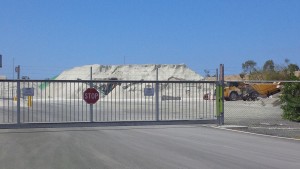
    Pacific Fertiliser’s is hard at work carting 30,000 tonne mined gypsum away from port.

    Gypsum ship