Author: admin

  • Buying Gypsum

    Buying Gypsum

    When buying gypsum from any supplier please ask the following questions when requesting delivered or ex works prices.

    • Price $/tonne
    • Do you have a recent analysis report (less than 6 months old) including
      • Gypsum purity (%)
      • Calcium and sulphur content (%)
      • Sizing (top and mean size)
      • Salt content %
      • Moisture content %

    Gypsum Quality Classification:

    • Premium Grade Gypsum described as : Gypsum must contain a minimum of 89% purity, 16.5% sulphur (S) and a minimum of 21.0% Calcium (Ca).
    • Grade 1 Gypsum described as : Gypsum must contain a minimum of 81% purity, 15.0% sulphur (S) and a minimum of 19.0% Calcium (Ca).
    • Grade 2 Gypsum described as : Gypsum must contain a minimum of 67% purity, 12.5% sulphur (S) and a minimum of 15.5% Calcium (Ca).
    • Grade 3 Gypsum described as : Gypsum must contain a minimum of 54% purity, 10.0% sulphur (S) and a minimum of 12.5% Calcium (Ca).

               Purity of gypsum is calculated by dividing the Sulphur content % by 0.186 (i.e. gypsum with 100% has 18.6% Sulphur). 

    Bulk-gypsum

  • Organic Farming

    Organic Farming

    Organic Passion – Landline Episode on organic farming and soft rock phosphate application

    Video Link

    soft rock phosphate


    Pacific Fertiliser supplies a lot of organic products and blends suitable for organic agriculture.

  • Pacific Fertiliser Blends

    Pacific Fertiliser Blends

    Pacific Fertiliser can blend and deliver tailored NPK fertiliser and mineral products to suit your soil and cropping requirements.

    pacific fertiliser

  • Fertiliser Spreaders

    Fertiliser Spreaders

    What spreader is suitable for what agricultural products.

    3-Point Linkage Spreaders

    The spreader mounted to a tractors linkage system and are a great addition, however they are only suitable for granular products like fertiliser, prilled lime, prilled gypsum etc. Powdered products like ag lime will block up in the hopper and won’t flow out.


    Belt Fertiliser Spreaders

    A trailing belt spreader towed behind a tractor will be good for both granular products and powdered products making it suitable for applying fertiliser and powdered products such as Ag Lime and Gypsum.

      Gypsum Spreading

    Chain Fertiliser Spreaders

    A trailing chain spreader towed behind a tractor will be good for both granular products, powdered products and wetter products like compost and manures. Generally accuracy of spread rates under 250kg/ha is not as good as a belt spreader.


    Aerial Fertiliser Spreaders

    Aerial Spreaders require granular products or prilled products like fertiliser, granular lime, granular gypsum etc. Powdered products like Fine Ag lime will block up in the hopper and won’t flow out.


  • Ag-Quip 2015

    Ag-Quip 2015

    We will be at this years Ag-quip field event during the 18-20th August in Gunnedah.

    Come and see us at Site – T38


  • Prilled Soft Rock Phosphate

    Prilled Soft Rock Phosphate

    Pacific Fertiliser is now offering a quality prilled soft rock product – RPRP – available form its Brisbane plant.

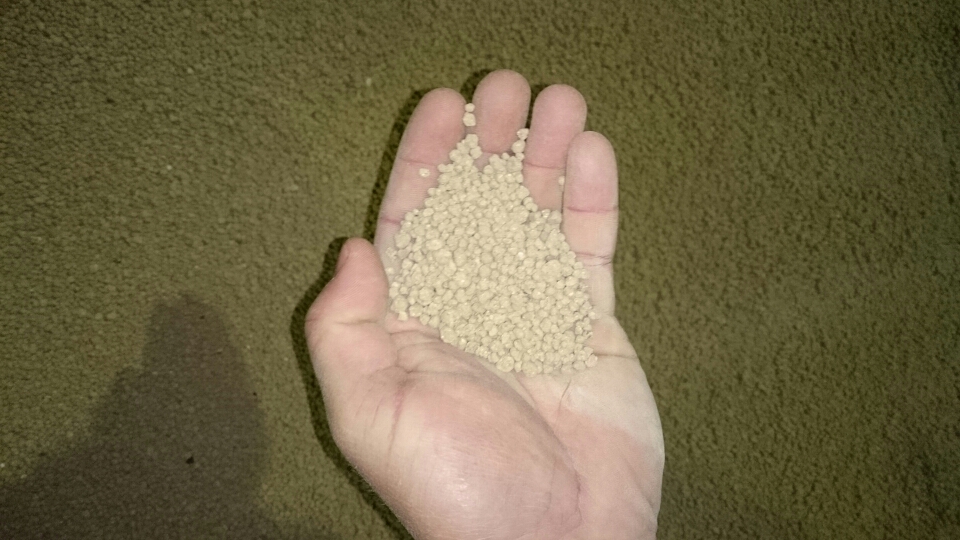
    RPRP a granular 2-4mm phosphate product.

    Granular Phosphate

  • THE IMPORTANCE OF SOLUBILITY IN SOIL CONDITIONERS

    THE IMPORTANCE OF SOLUBILITY IN SOIL CONDITIONERS

    Solubility in soil conditioners, such as gypsum, lime and dolomite are very important.  The key to solubility is mainly in particle size.  The finer the product, whether it be in gypsum, lime, dolomite or any other natural occurring mineral the quicker the result.

    Natural raw gypsum, aglime and dolomite should be applied at least six months before cropping to achieve worthwhile results. Products such as Mine2g gypsum which have a mean particle size below 0.5mm and 99% passing 2mm mesh will have a high solubility compared to standard natural gypsum.

    Recycled gypsum, superfine lime and dolomite however are a different story.  Recycled gypsum from plaster board has been refined to very small particles in the production of the plaster board, making it far more soluble than raw gypsum, in other words, you can apply it just before cropping and get a good result.

    In the case of Superfine lime and dolomite against aglime, you will achieve a much quicker response.  The smaller particles are the secret to quicker results and of course higher yielding crops.

    Soluble gypsum Q&A document


    Bulk Lime

  • Treatment of Acid Sulphate Soil

    Treatment of Acid Sulphate Soil

    [fusion_builder_container type=”flex” hundred_percent=”no” equal_height_columns=”no” menu_anchor=”” hide_on_mobile=”small-visibility,medium-visibility,large-visibility” class=”” id=”” background_color=”” background_image=”” background_position=”center center” background_repeat=”no-repeat” fade=”no” background_parallax=”none” parallax_speed=”0.3″ video_mp4=”” video_webm=”” video_ogv=”” video_url=”” video_aspect_ratio=”16:9″ video_loop=”yes” video_mute=”yes” overlay_color=”” video_preview_image=”” border_color=”” border_style=”solid” padding_top=”” padding_bottom=”” padding_left=”” padding_right=””][fusion_builder_row][fusion_builder_column type=”1_1″ layout=”1_1″ background_position=”left top” background_color=”” border_color=”” border_style=”solid” border_position=”all” spacing=”yes” background_image=”” background_repeat=”no-repeat” padding_top=”” padding_right=”” padding_bottom=”” padding_left=”” margin_top=”0px” margin_bottom=”0px” class=”” id=”” animation_type=”” animation_speed=”0.3″ animation_direction=”left” hide_on_mobile=”small-visibility,medium-visibility,large-visibility” center_content=”no” last=”true” min_height=”” hover_type=”none” link=”” border_sizes_top=”” border_sizes_bottom=”” border_sizes_left=”” border_sizes_right=”” first=”true”][fusion_text]

    Treatment of Acid Sulphate Soils

    Acid sulphate soil (ASS) is the common name given to soils and sediments containing iron sulfides, the most common being pyrite. When exposed to air due to drainage or disturbance, these soils produce sulphuric acid from reacting with oxygen, often releasing toxic quantities of heavy metals to the wider environment.

    Excavation of potential acid sulphate soils (PASS) can lead to the creation of actual acid sulphate soils (AASS). To reduce the possibility of potential acid sulphate soils becoming actual acid sulphate soils, there are four main management techniques used to minimise this possibility and its effects:

    – Minimising disturbance
    – Neutralisation
    – Reclaiming land
    – Water cover

    In many cases minimising disturbance is not possible especially in relation to construction projects. Reclaiming land and water cover are based on removing the possibility of oxygen coming into contact with the sulphate within the soil, but in many circumstances is not possible. Therefore neutralisation is the only management technique available in many situations where acid sulphate soil is present.

    The way in which acid sulphate soil is neutralised is relatively simple in that a highly basic material, such as lime, is mixed with the acid sulphate soil. The amount of lime required to be mixed with the acid sulphate soil is determined by analysing a sample of soil to calculate actual acidity and relating the amount of lime required to be added to effectively neutralise the soil.

    In many cases of acid sulphate soil treatment, agricultural lime (Ag lime) is used to neutralise the soil. However, there are other reagents available, which are effective such as hydrated lime, mixtures of hydrated lime and Ag lime, and also lime slurries, which can be added as a liquid.

    Pacific Fertiliser can supply and deliver bulk or bagged lime products and other products such as hydrated lime to address your acid sulphate soil issues in NSW, QLD and VIC. We also have equipment and staff to spread, incorporate and mix materials into the treatment areas.

    We can work in accordance with your ASS Management Plan (generally provided to you by soil analysis contractor such as SESL etc) and ensure that the correct addition rates of lime (or other product) with homogenous mixing into the soil at correct depths, to provide the best result on your project.

    products_lime
    Acid Sulphate Soil

    [/fusion_text][/fusion_builder_column][/fusion_builder_row][/fusion_builder_container]

  • Variable Rate Spreading Cowra

    Variable Rate Spreading Cowra

    Contract Spreaders offers variable rate liming and gypsum applications in Central West NSW.

    The new AS120T agri-spread spreader provides precise placement of product and variable rate technology to take advantage of pH and EC mapping.

    The aim are variable rate spreading is not necessarily to save dollars by applying less product, but rather apply the correct rate to different areas of the paddock in order to improve crop production.

    crop mapping

    THE ADVANTAGES OF VARIABLE RATE SPREADING
    – Can reduce soil ameliorant/fertiliser costs
    – Ensures product is applied in the areas of a field it is most needed
    – Will increase the availability of nutrients in all areas of the field
    – Will increase the efficiency of fertiliser applications

    CS logoGypsum Spreading

    www.contractspreaders.com


  • Road Training Gypsum Throughout QLD

    Road Training Gypsum Throughout QLD

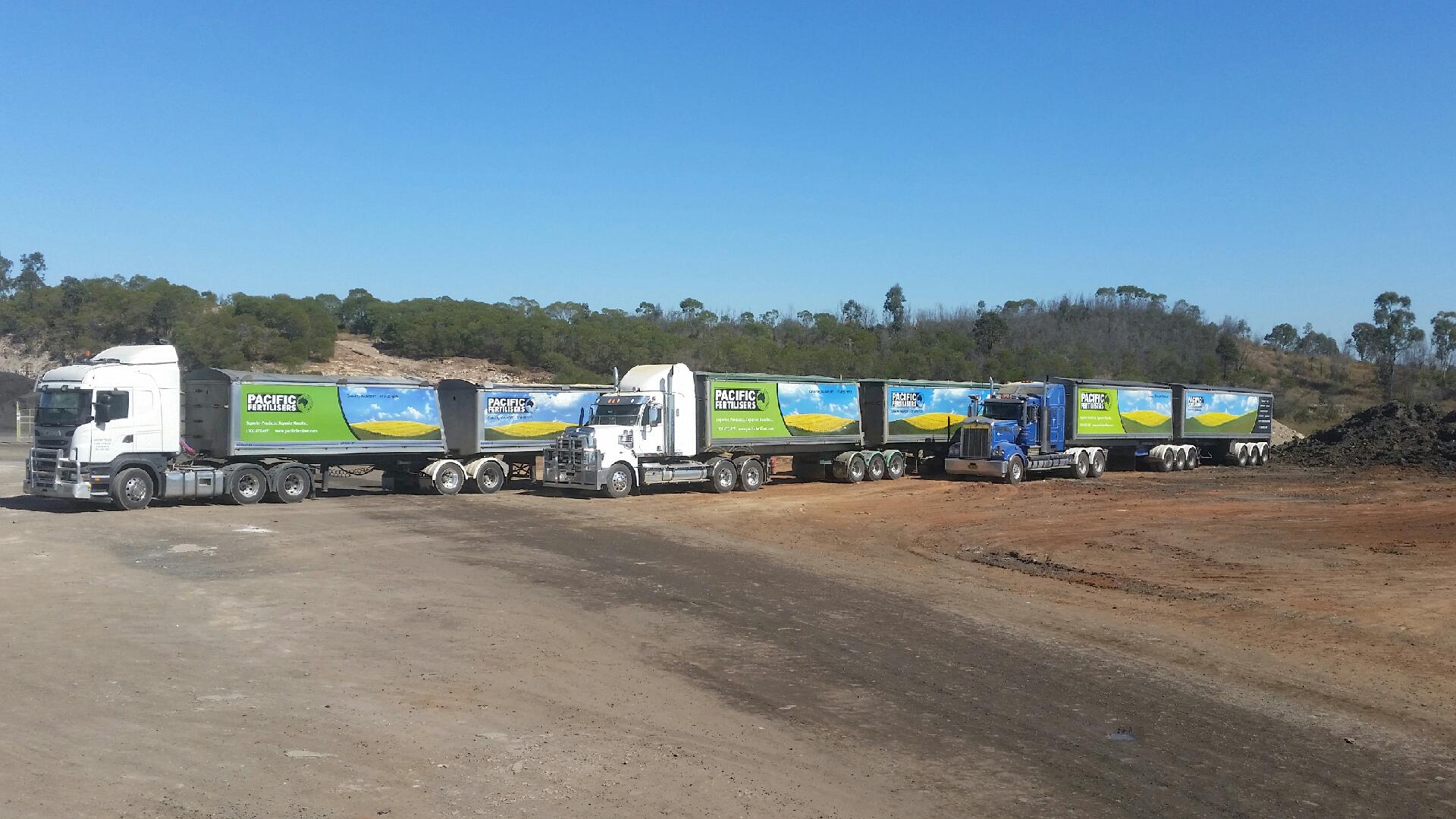
    Pacific Fertiliser is current supplying some large volumes of gypsum in QLD.

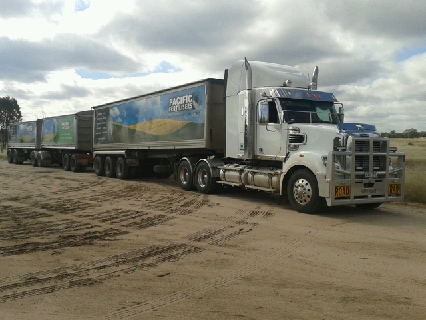
    To cater for the demand we had to assemble some of our trailers into a road train.

    QLD Gypsum