Pacific Fertiliser sells high quality lime products throughout QLD.
We sell Ag lime and lime products suitable for agriculture, industrial and civil applications.
Products are available in bulk and bag.

Ravensdown will exit the Australian fertiliser market and cease its Queensland operations.
The move comes five months after the completion of the sale of Ravensdown’s operations in Western Australia and South Australia and within a financial year that has seen the farmer-owned co-operative meeting its turnaround expectations in New Zealand.
Ravensdown Fertiliser Australia was set up in 2009 after cane growers invited the co-operative to start supplying soil nutrients. The original business plan based its viability on a 100,000 tonnes a year target. But cyclones, flooding and depressed world prices for sugar meant fertiliser tonnages reached only 70,000 tonnes last year.
Ravensdown are concetrating on the Zealand market, by investing in advanced nutrient management training, new infrastructure such as new loaders in stores and in technology such as Smart Maps which provides a visual audit trail for a farm’s nutrient status. Ravensdown are seeing strong demand from a buoyant New Zealand sector and have good availability of products like superphosphate, DAP and urea in our stores,” concluded Greg Campbell.
Ravensdown was created after farmers were getting frustrated by rising input costs and falling fertiliser quality. This was compounded in 1977 when the two large private companies supplying superphosphate into New Zealand creating a monolpoly. Kempthorne Prosser announced it was going to be buying its rival, Dunedin-based Dominion fertilisers,
The then presidents of the South Canterbury, Otago and North Otago Federated Farmers went to farmers in the area to ask them to become founding members of a new co-operative. Ravensdown eventually mounted a takeover bid for KP which was completed on 16 August 1978.

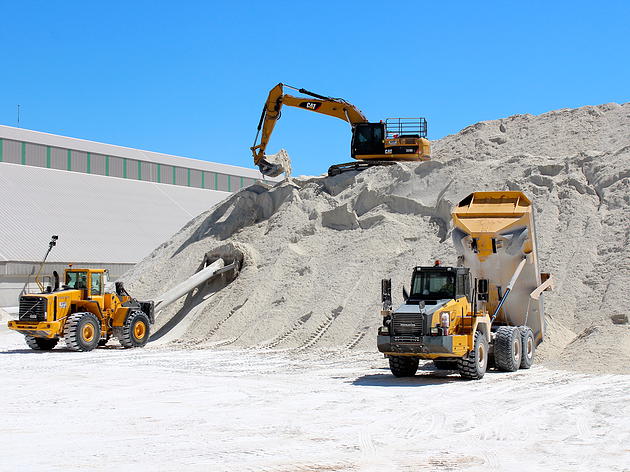
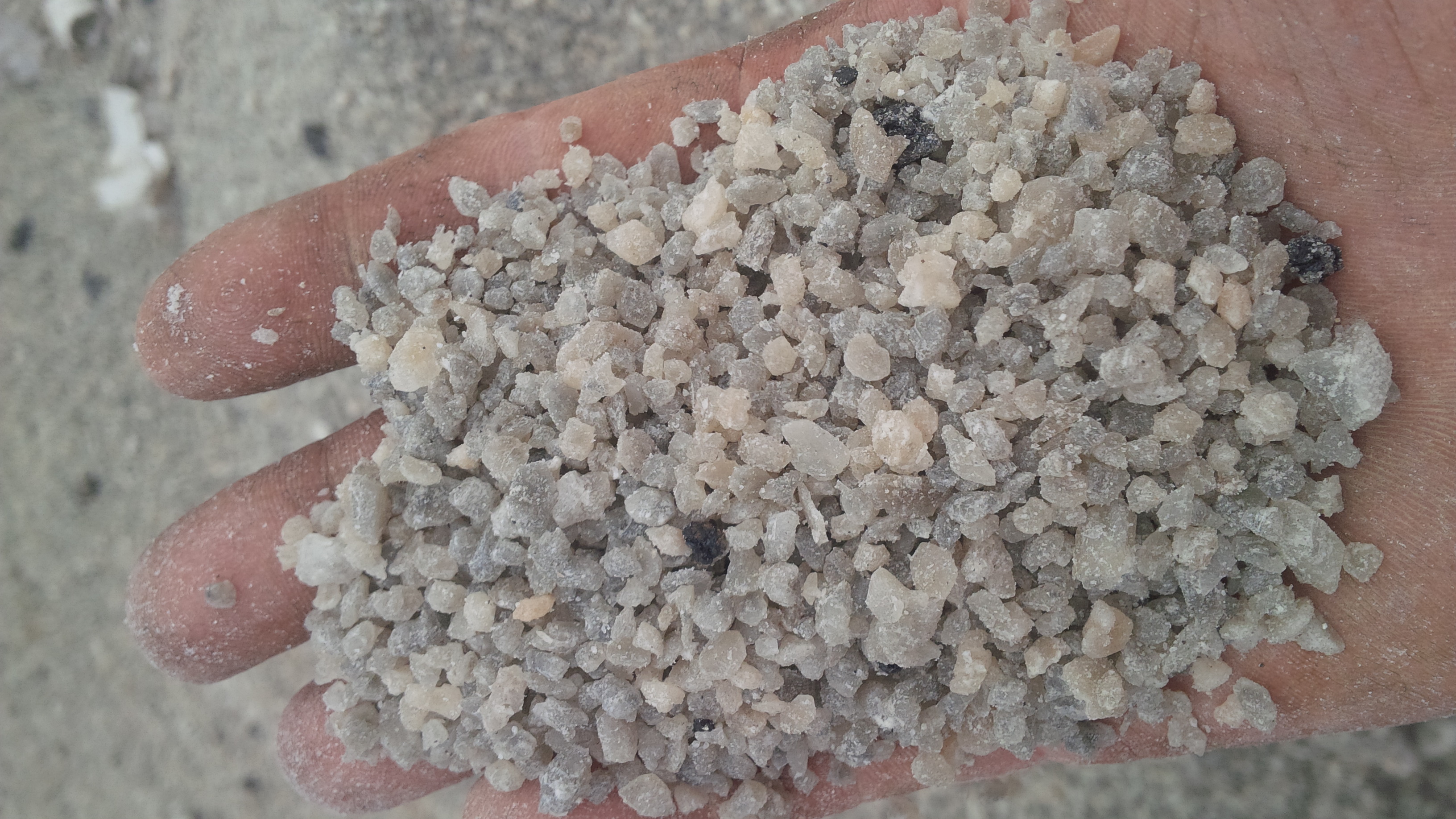
Pacific Fertiliser supplies numerous gypsum products into the QLD market.
The gypsum products include:
– QLD Mined gypsum
– QLD Screened mined gypsum
– QLD Milled gypsum
– QLD superflocc gypsum
– QLD Prilled gypsum & QLD Granulated gypsum
– QLD gypsum blends (with products like phosphate, lime, elemental sulphur etc)
– QLD Recycled gypsum
Pacific Fertiliser supplies gypsum to the QLD market for agricultural, mining and civil engineering applications. The gypsum products are available in bulk and bag.

[fusion_builder_container type=”flex” hundred_percent=”no” equal_height_columns=”no” menu_anchor=”” hide_on_mobile=”small-visibility,medium-visibility,large-visibility” class=”” id=”” background_color=”” background_image=”” background_position=”center center” background_repeat=”no-repeat” fade=”no” background_parallax=”none” parallax_speed=”0.3″ video_mp4=”” video_webm=”” video_ogv=”” video_url=”” video_aspect_ratio=”16:9″ video_loop=”yes” video_mute=”yes” overlay_color=”” video_preview_image=”” border_color=”” border_style=”solid” padding_top=”” padding_bottom=”” padding_left=”” padding_right=””][fusion_builder_row][fusion_builder_column type=”1_1″ layout=”1_1″ background_position=”left top” background_color=”” border_color=”” border_style=”solid” border_position=”all” spacing=”yes” background_image=”” background_repeat=”no-repeat” padding_top=”” padding_right=”” padding_bottom=”” padding_left=”” margin_top=”0px” margin_bottom=”0px” class=”” id=”” animation_type=”” animation_speed=”0.3″ animation_direction=”left” hide_on_mobile=”small-visibility,medium-visibility,large-visibility” center_content=”no” last=”true” min_height=”” hover_type=”none” link=”” border_sizes_top=”” border_sizes_bottom=”” border_sizes_left=”” border_sizes_right=”” first=”true”][fusion_text]
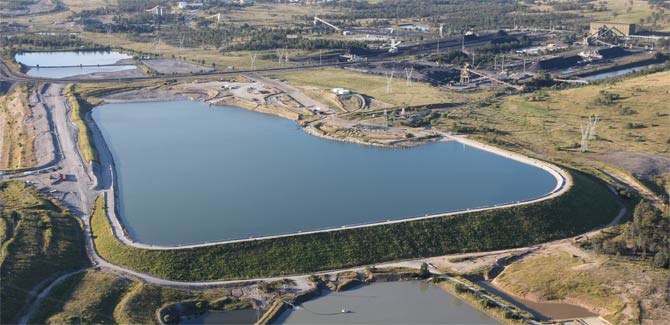
Pacific Fertiliser can supply numerous products for dam construction projects, or both large and small ponds. these include:
• Gypsum for dam wall soil stabilisation
• Bentonite for dam wall sealing
• Various lime products
• Superflocc gypsum for reducing water turbidity by removing sediment to increase water quality
We can supply products for both large dams and small ponds.
Some of the previous large projects we have been involved with prior to 2014:
• Bulga S10 Dam -Hunter Valley NSW
• Bulga CHPP Surge Dam – Xstrata – Hunter Valley NSW – $24m – 3000 ML
• Mt Thorley Dam – Warkworth Mining – South Pit Dam – Hunter Valley NSW – $6m – 2GL
• Talgarth Farm Dam – Hunter Valley NSW – 100 ML
• Monreagh Storage Dam – Origin Energy CSG – 3000ML
• Kenya Dam – QGC CSG
• Orana Dam – Origin CSG
• Bengalla CW1 Dam – Hunter Valley NSW
• Bengalla Mine Dry Creek Diversion Project – Hunter Valley NSW
• Bengalla Mine Spill Dams – Hunter Valley NSW
[/fusion_text][/fusion_builder_column][/fusion_builder_row][/fusion_builder_container]

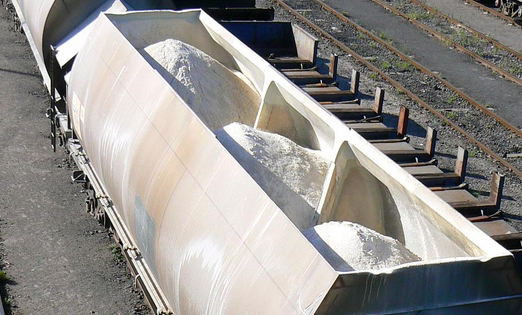
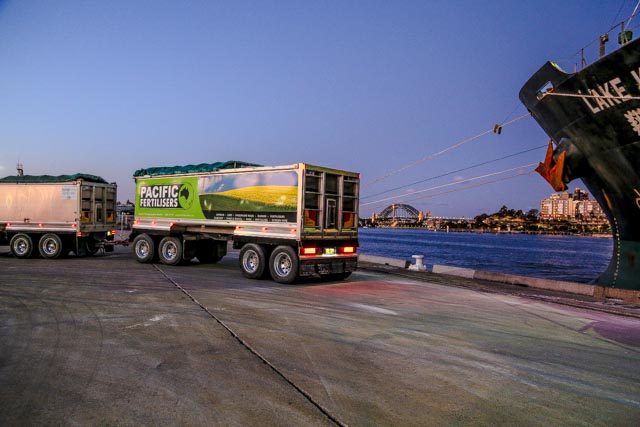
PacFert can offer mined gypsum loading from bogie loads to 5 axle dogs from our Rozelle site in Sydney NSW.
Other special products and blends come out of our Cowra site.
We can package the natural high quality grade 1 gypsum with competitive bulk transport and spreading services.
Our gypsum is 93+% pure, ensuring you aren’t buying, transporting and spreading a large percentage of dirt of other impurities.

PacFert can offer mined gypsum loading from bogie loads to road train trailers and B-doubles from Pinkenba and Port of Brisbane in QLD.
Other special products and blends come out of the Ipswich site.
We can package the natural high quality grade 1 gypsum with competitive bulk transport and spreading services.
Our gypsum is 95+% pure, ensuring you aren’t buying, transporting and spreading a large percentage of dirt or other impurities.
Pacific Fertiliser can provide competitive phosphate rock products and blends to New Zealand.
The phosphate can be blended with sulphur and other minerals and trace elements to meet your requirements. We can also provide aerial grade blends suitable for aerial spreading.
Products are available in bulk or Bulkbags.

Agricultural production removes plant nutrients; therefore, these must be replaced to sustain production. Phosphorus (P) and nitrogen (N) are perhaps the two nutrients of greater importance because Australian soils are inherently low in these elements. In the case of P, reactive phosphate rock (RPR) is the most practical fertiliser to replace P in broad-acre organic farming (Penfold 2000). For N, the optimal replacement strategy is legume N2 fixation; however, this process is highly dependent on P nutrition (Donald and Williams 1956). Hence, replacing P is crucial to sustaining productive organic cropping systems.
Phosphate rock (PR) is an allowed input for managing phosphate fertility on organic farms and is potentially suitable for mildly acidic to strongly acidic soils, because acidity is required to breakdown the phosphate rock to release P in a form that is available to plants. However, PR is generally only effective under substantially higher rainfall conditions than occur in the southern cropping regions of Australia, where previous work has sometime found it to be ineffective. In many soils, elemental sulphur (S) is naturally oxidised by soil bacteria to produce acid. Mixing PR with S may thus have a positive role in improving the effectiveness of PR in the southern cropping areas.

Balance
A quality fertiliser should have a balance of all the nutrients needed for optimum plant growth, yield, and quality. Does your fertiliser contain more than N-P-K? Does it include calcium and sulfur? How about trace minerals? If you answered yes, than you are part of the way toward a quality fertiliser. If you said no or don’t know, consider changing to a more balanced fertiliser.
Soluble to Slow-Release
This aspect of fertiliser refers to nutrient availability over time. Most fertilisers are highly soluble, which gives the plant a dose of nutrients early on, but leaves fewer nutrients for later in the growing season. By balancing soluble to slow-release, the plant receives adequate nutrients throughout the growing season. The source of nutrients you use can make a big difference in how those nutrients are distributed over time. Take a look at your nutrient source. MAP, for example, has a lower pH which will allow for a longer feed time in the soil compared to DAP. Potassium from K-mag and Sulfate of Potash will release slower in the soil than 0-0-60 (potassium chloride) because 0-0-60 is very water soluble.
pH
The pH of fertiliser plays an important role in its availability. When a fertiliser has a pH in the range of 5.5 to 6.5, the nutrients are more available to the plant with less chance of them becoming tied up in the soil. Also, the lower pH fertiliser helps to make nutrients already in the soil more available to growing plants. This can mean more nutrient release and uptake in the root zone. Do you know the pH of your fertiliser ingredients?
Non-Harmful
A fertiliser should be as gentle as possible on the soil, the roots and the soil microbes. High levels of chloride (found in 0-0-60) and ammonia (found in anhydrous or DAP) can have negative side effects such as causing burn which can harm seedlings and roots. Keeping those negatives to a minimum, plus supplying root and biological stimulants, can have a positive effect on yield.
Pacific Fertilisers custom blended products are formulated with all of the above in mind. PacFert finds and sources ingredients that make a complete balanced fertiliser. We blend soluble and slow-release nutrients, and we look at the pH balance to determine quality and effectiveness when applied to the soil. We can also use humates as a carbon source to hold nutrients in the soil so they can be available all season to the plant. Using the right source and having it available at the right time keeps your costs down and at the same time maximizes your crop’s potential.